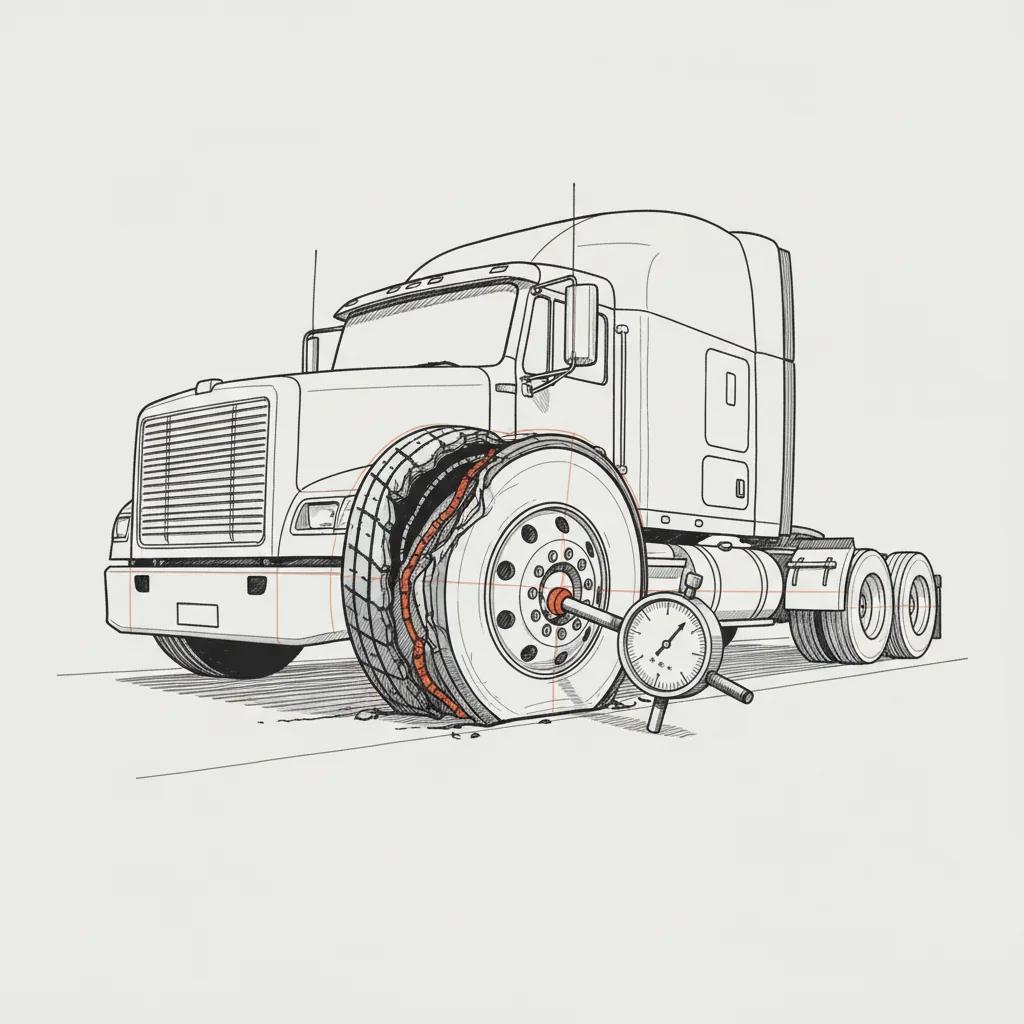
A semi tire blowout is most often caused by under-inflation, not a road hazard. When a commercial tire runs low on air, the sidewalls flex more than they are built to, that flexing builds heat, and the heat eventually breaks down the rubber and casing until the tire fails. You prevent the vast majority of blowouts by keeping tires at their correct pressure for the load, inspecting them before every trip, and replacing casings before they age or wear out. Properly matched load, speed, and inflation are what keep a tire alive.
For drivers running the I-5, I-80, CA-99, and US-50 corridors out of Sacramento, summer pavement temperatures make this even more important. Heat is the enemy of a truck tire, and the Central Valley produces plenty of it.
What Actually Causes a Semi Tire Blowout
A blowout is a sudden, rapid loss of air, usually because the tire's structure has already been compromised over time. The hazard you hit on the highway is often just the final trigger. The real cause built up over days or weeks of operation.
The most common contributors are:
- Under-inflation. A tire carrying less air than the load requires flexes excessively and overheats. The Federal Motor Carrier Safety Administration (FMCSA) identifies tire problems, including improper inflation, as a leading factor in commercial vehicle breakdowns and roadside violations.
- Overloading. Exceeding the tire's rated load, or the axle's, puts stress the casing was never designed to handle.
- Excessive heat. Long runs at highway speed in hot weather raise internal tire temperature. Combined with low pressure, heat accelerates failure.
- Old or fatigued casings. Rubber degrades with age and mileage. Tire manufacturers such as Michelin and Bridgestone publish guidance recommending that commercial tires be inspected closely as they age, regardless of remaining tread.
- Road hazards and impacts. Potholes, curbs, debris, and dropped trailers can cut or pinch a tire, creating a weak point that later lets go.
- Improper repairs or mismatched duals. A bad plug, or two dual tires at different diameters, forces one tire to carry more than its share.
Why Heat and Under-Inflation Work Together
Under-inflation and heat are not two separate problems. They feed each other. A soft tire flexes more, flexing generates heat, and heat lowers the rubber's strength.NHTSAhas long noted that under-inflation is a primary cause of tire failures because of this heat buildup. On a 100-degree Sacramento afternoon, a tire that is already 15 PSI low has very little margin left.
How to Prevent Semi Tire Blowouts
Prevention is routine, not luck. The habits below cost minutes and prevent hours of downtime on the shoulder.
Maintain Correct Inflation for the Load
Inflation pressure should match the load on the tire, using the load-and-inflation tables published by your tire manufacturer. Do not guess, and do not simply max out the sidewall number.
- Check pressure cold, before the truck has been driven, using a calibrated gauge. Tires heat up and read higher after running.
- Check every tire, including the inner duals, which are the easiest to ignore and the most likely to run low unnoticed.
- Keep duals within a few PSI of each other so they share the load evenly.
- Do not bleed air out of a hot tire to "correct" a high reading. That leaves it under-inflated once it cools.
Inspect Before Every Trip
A pre-trip walkaround catches most developing problems. Look and feel for:
- Cuts, bulges, cracks, or embedded objects in the tread and sidewall.
- Uneven or irregular wear, which points to alignment, balance, or inflation issues.
- Tread depth at or near the legal minimum. FMCSA regulations require at least 4/32 inch on steer tires and 2/32 inch on other tires.
- Valve caps in place and valve stems intact.
- Signs of heat on a recently parked tire, such as an unusually hot wheel or a smell of hot rubber.
Manage Load, Speed, and Age
- Stay within the tire's and axle's rated capacity. Distribute freight so no single axle is overloaded.
- Respect the tire's speed rating, especially in summer heat. Sustained high speed adds heat fast.
- Track tire age and mileage. Pull casings from service based on the manufacturer's guidance, not just visible tread.
- Use quality retreads from a reputable source and inspect them with the same care as new tires.
Use Technology Where It Helps
Many fleets now run tire pressure monitoring systems (TPMS) and automatic tire inflation systems on trailers. These warn a driver before a slow leak turns into a blowout. They do not replace a hands-on inspection, but they add a useful early warning, particularly for inner duals you cannot easily reach.
What to Do When a Blowout Happens
Even with good maintenance, a road hazard can still take a tire. How you react matters.
- Hold the wheel firmly and stay straight. A steer-tire blowout will pull hard. Grip the wheel and keep the truck tracking straight.
- Do not slam the brakes. Hard braking can make the truck harder to control. Ease off the throttle and let it slow.
- Gradually move to a safe shoulder once the truck is stable, well clear of traffic.
- Set out reflective triangles as required and keep yourself out of the traffic lane.
- Call for help rather than attempting a roadside change in a live lane. Commercial tires are heavy and dangerous to handle near moving traffic.
A blowout often damages more than the tire. Flailing tread can tear out air lines, wiring, fenders, and mudflaps, which is why a thrown tire frequently turns into a multi-system repair. If you are stuck on a Northern California highway, professional roadside truck repair gets the tire and any collateral damage handled safely without putting you in traffic.
FAQ
What is the most common cause of a semi truck tire blowout?
Under-inflation is the most common cause. A tire running low on air flexes too much, overheats, and eventually fails. NHTSA and FMCSA both highlight improper inflation as a leading factor in commercial tire failures.
How often should I check semi truck tire pressure?
Check tire pressure before every trip, when the tires are cold, with a calibrated gauge. Inner dual tires are the most likely to lose air unnoticed, so include them every time.
What is the legal minimum tread depth for a semi truck tire?
FMCSA regulations require steer tires to have at least 4/32 inch of tread and all other tires at least 2/32 inch. Tires below those limits are out of service.
Can a tire pressure monitoring system prevent blowouts?
A TPMS helps by warning you of a slow leak or low pressure before it leads to a blowout, but it does not replace pre-trip inspections. Use both together for the best protection.
Should I change a blown semi tire myself on the highway?
No. Commercial tires are heavy and changing one near live traffic is dangerous. Move to a safe shoulder, set out triangles, and call for roadside assistance.
If you have a blowout or want a tire checked before it becomes one, 916 Truck Repair offers 24/7 mobile dispatch across Sacramento and Northern California. Call (916) 898-9090 and we will come to you on the I-5, I-80, CA-99, or US-50 corridor.
 By Vladimir Sardari · Owner & Lead Technician