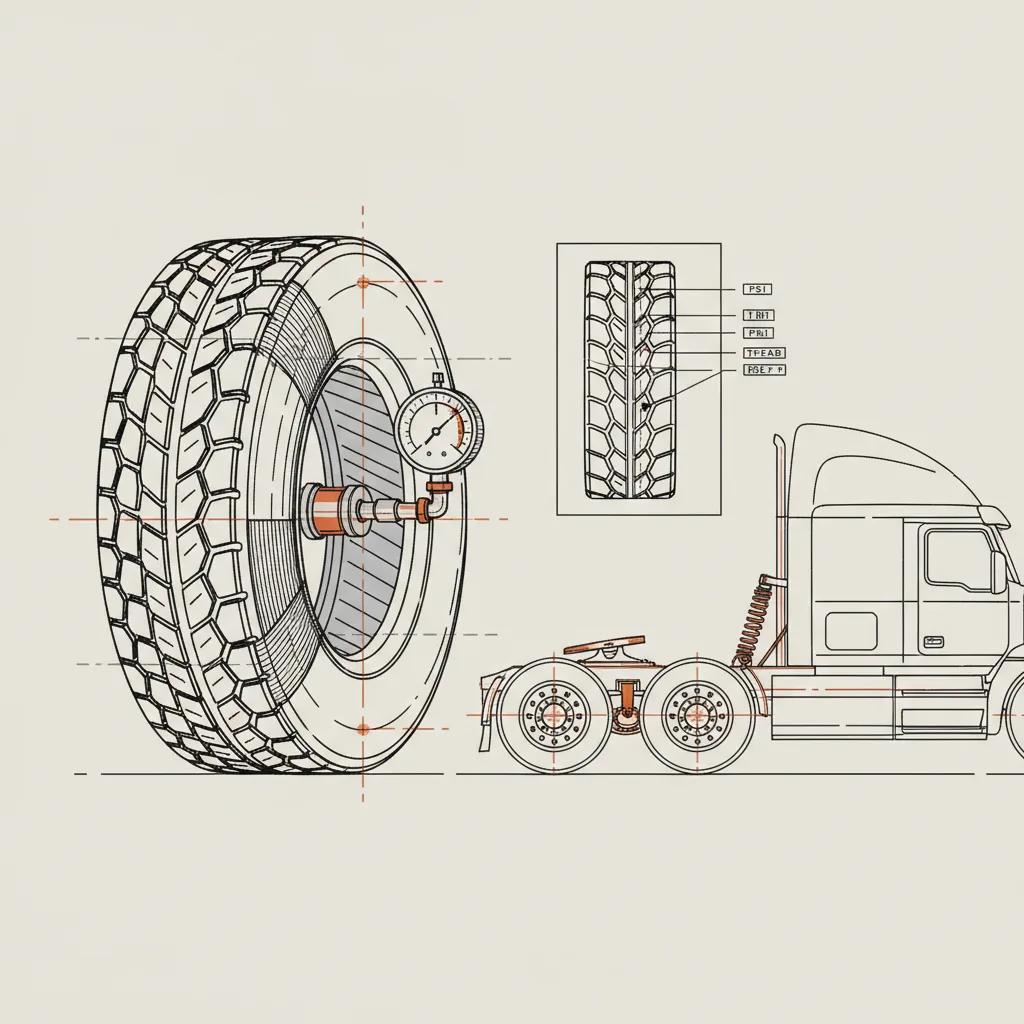
Correct commercial truck tire pressure is the cold inflation pressure the tire manufacturer specifies for the actual load on that axle, not a single number for the whole truck. Steer, drive, and trailer positions usually run different pressures, and the right figure comes from the tire maker's load and inflation tables matched to your scaled axle weights. Check it cold, before the truck has run more than about a mile, because heat from driving raises pressure and hides the true setting.
Getting this right is one of the cheapest ways to protect your tires, your fuel economy, and your DOT inspection record. Below is how to find your target pressures, how to check them, and what to do when something goes wrong.
Why Truck Tire Pressure Matters
Tires are typically a fleet's second-largest operating cost after fuel, and pressure drives both. Underinflation increases rolling resistance, which burns more diesel, and it builds excess heat inside the casing, the leading cause of catastrophic blowouts and the tire debris you see on the shoulder. Overinflation reduces the contact patch, which shortens tread life in the center and hurts traction.
The practical consequences of running the wrong truck tire pressure:
- Blowouts and road calls from heat-stressed, underinflated casings
- Irregular and premature tread wear, cutting miles out of an expensive tire
- Worse fuel economy from added rolling resistance
- Reduced retreadability, since a damaged casing can't be recapped
- DOT violations, because flat, leaking, or visibly defective tires are inspection items
The Federal Motor Carrier Safety Administration (FMCSA) lists tire conditions, including flat tires and audible air leaks, among out-of-service criteria in roadside inspections, so a pressure problem isn't just a maintenance issue, it's a compliance one.
How to Find the Right Pressure for Each Axle
There is no universal PSI for a commercial truck. The correct pressure depends on the load each tire carries, and that varies by position and by how the truck is loaded.
Use the manufacturer's load and inflation tables
Every major tire maker, including Michelin, Bridgestone, Goodyear, and Continental, publishes load and inflation tables for their commercial tires. These tables tell you the minimum cold pressure needed to safely carry a given load per tire or per axle. To use them:
- Weigh each axle on a certified scale at your typical loaded weight
- Divide the axle weight to get the load per tire (remember drives and trailers usually run duals)
- Look up that load in your tire's table to find the minimum required cold PSI
- Add a reasonable margin for load variation, but never exceed the max pressure molded on the sidewall or the rim's rated pressure
Typical position differences
While your tables are the authority, line-haul tractor-trailers commonly run different pressures front to back because the loads differ:
- Steer axle carries concentrated weight on two single tires and is often the highest pressure
- Drive axles carry the powertrain load across duals
- Trailer axles carry the freight across duals and depend heavily on how the load is distributed
Mismatched pressure between dual tires is its own problem: if one tire in a pair runs low, the other carries more than its share, and both wear unevenly. Keep duals within a few PSI of each other.
How to Check Tire Pressure Correctly
The single most common mistake is checking warm tires. As tires roll, internal air heats and expands, raising pressure well above the cold reading. If you set pressure on a hot tire to the table value, the tire is actually underinflated once it cools.
Do it the right way:
- Check cold — before driving, or after the truck has sat several hours
- Use a calibrated stick or dial gauge, not a thumb thump on the tread; a tire can lose a large share of its air and still look and sound full
- Check every position, including inner duals, using a dual-foot gauge or valve extensions
- Inspect while you're there for cuts, bulges, embedded objects, sidewall damage, and valve cap presence
- Log it so you can spot a slow leaker before it strands you
Tire monitoring and automatic inflation
Many fleets add tire pressure monitoring systems (TPMS) that alert the driver to a low or hot tire, and some trailers use automatic tire inflation systems that maintain pressure on the road. These reduce road calls but don't replace a cold manual check, sensors fail and valves stick.
Seasonal and Northern California Conditions
Ambient temperature changes pressure. As a rule of thumb the industry uses, tire pressure shifts roughly 1 to 2 PSI for every 10°F change in temperature. That matters on Northern California routes:
- A Sacramento Valley summer over 100°F followed by a cold dawn start can swing your morning cold pressure noticeably
- Climbing the I-80 Sierra corridor into winter cold drops pressure as you gain elevation and temperature falls
- Long descents on US-50 or I-80 add heat through braking near the wheel ends
Recheck cold pressures with the seasons, not just once a year, and don't bleed air out of a hot tire that reads high after a hard run, it will be correct again once cool.
What to Do When a Tire Goes Down
If you lose pressure on the road, get the truck stopped safely and don't keep rolling on a flat or rapidly deflating tire, running a casing flat destroys it and can damage the wheel, fender, and air lines. A blowout at highway speed on I-5 or CA-99 is exactly the kind of event that puts a rig on the shoulder.
For a roadside tire failure, a service call gets you a proper repair or replacement at the wheel end rather than limping to a shop. Our roadside truck repair service handles tire-related breakdowns and the air-system and wheel-end issues that often come with them. For fleets that would rather catch low and uneven tires before they fail, scheduled on-site fleet repair builds pressure checks into routine maintenance at your yard.
FAQ
What is the correct tire pressure for a commercial truck?
There is no single number. The correct cold pressure is set from the tire manufacturer's load and inflation table based on the actual weight on each axle. Steer, drive, and trailer positions commonly run different pressures, and you should never exceed the max pressure shown on the sidewall or the wheel's rating.
Should I check truck tires hot or cold?
Always check cold, before driving or after the truck has sat for several hours. Driving heats the air inside the tire and raises the reading, so a hot check makes a properly inflated tire look overinflated and an underinflated one look fine.
How does temperature affect truck tire pressure?
A common industry rule of thumb is that pressure changes about 1 to 2 PSI for every 10°F change in ambient temperature. Cold mornings and elevation gains lower it, while hot afternoons and hard running raise it, which is why you should recheck cold pressures seasonally.
Can low tire pressure cause a DOT violation?
Yes. The FMCSA includes tire conditions such as flat tires and audible air leaks among roadside out-of-service criteria, so a low or leaking tire can put your truck out of service during an inspection.
Why are my dual tires wearing unevenly?
Uneven wear on duals often comes from a pressure mismatch between the two tires in a pair. When one runs low, the other carries extra load and both wear abnormally. Keep matched duals within a few PSI of each other and check inner tires, not just the outers.
Get Help With Tire and Roadside Problems
Whether you're stranded with a blowout or want pressure checks built into your fleet maintenance, 916 Truck Repair provides mobile, on-site service. Call (916) 898-9090 for 24/7 mobile dispatch across Sacramento and Northern California, including the I-5, I-80, CA-99, and US-50 corridors.
 By Vladimir Sardari · Owner & Lead Technician