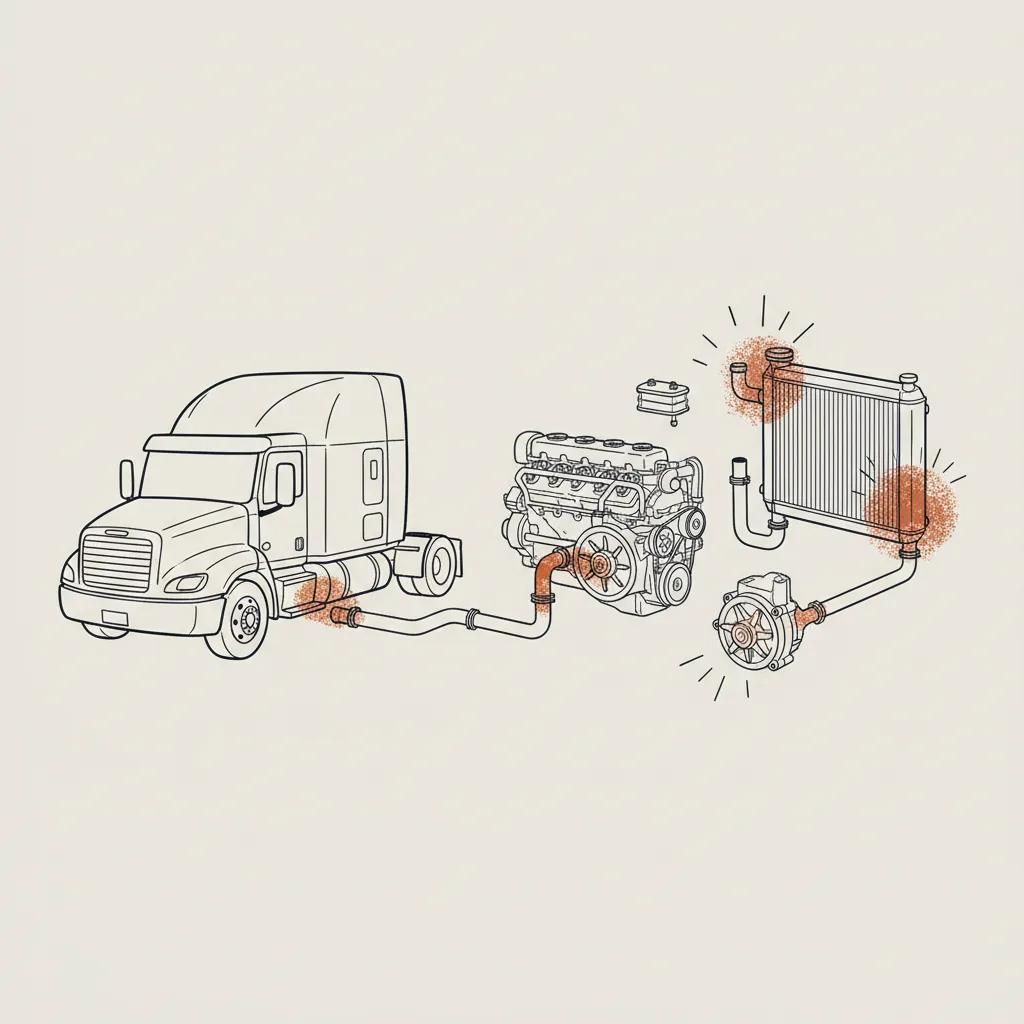
A semi truck coolant leak most often comes from a worn or loose hose, a cracked or corroded radiator, a failing water pump, or a leaking gasket or seal. On modern diesels, the EGR cooler and oil cooler are common culprits too. The quickest way to find it is to look for green, orange, or pink fluid under the truck, a sweet smell, a dropping coolant level, and rising coolant temperature.
Losing coolant is never a problem to ride out. A diesel engine that runs low on coolant overheats quickly, and sustained overheating can warp a cylinder head, blow a head gasket, or seize the engine. Catching a leak early is the difference between a hose swap and a major engine repair.
How to Spot a Coolant Leak Early
Coolant leaks rarely appear out of nowhere. The warning signs usually show up days or weeks before a roadside breakdown.
- Puddles or drips under the truck that are green, orange, yellow, or pink and feel slick or sticky.
- A sweet, syrupy smell inside or around the cab, especially with the heater running.
- A coolant level that keeps dropping in the surge tank or reservoir between checks.
- Rising coolant temperature on the dash gauge, or temperature that swings up under load or on a grade.
- White or sweet-smelling exhaust steam, which can point to coolant entering the combustion chamber.
- Visible residue or "crusty" stains around hose clamps, the radiator, the water pump, or gasket seams.
If the temperature gauge climbs into the red, pull over safely and shut down. Continuing to drive an overheating diesel risks turning a minor leak into a catastrophic failure.
Common Causes of a Semi Coolant Leak
Worn or Loose Hoses and Clamps
Radiator hoses, heater hoses, and coolant lines live in a hot, vibrating, high-pressure environment. Over time the rubber hardens, cracks, or balloons, and clamps loosen. Hoses are one of the most frequent sources of a semi coolant leak and also one of the most preventable with routine inspection. A hose that feels rock-hard, spongy, or shows cracks when you squeeze it is overdue for replacement.
Radiator Damage and Corrosion
The radiator takes constant abuse from road debris, bugs, and pressure cycling. Common failure points include cracked plastic end tanks, corroded tubes, a damaged core from a rock strike, and a leaking radiator cap that no longer holds system pressure. A clogged or corroded radiator can also drive up temperatures, which stresses the rest of the cooling system and accelerates other leaks.
Water Pump Failure
The water pump circulates coolant through the engine and radiator. When the shaft seal wears out, coolant weeps from the pump's weep hole, often leaving a stain below the front of the engine. A failing pump may also whine, grind, or wobble. Once the seal goes, the leak only gets worse, so a weeping water pump should be addressed promptly.
Gasket and Seal Failures
Gaskets seal the joints between major engine components, and coolant passes through several of them. Leaks commonly develop at the head gasket, water pump gasket, thermostat housing, and various O-rings and seals. A head gasket leak is the most serious: it can let coolant into the oil (turning it milky) or into the cylinders, and it usually means the engine needs to come apart. Any sign of coolant in the oil warrants a stop and a professional diagnosis before more damage is done.
EGR Cooler and Oil Cooler Leaks
Modern emissions-controlled diesels route coolant through the EGR cooler and the engine oil cooler. Both are exposed to high heat and pressure cycling, and both are known to crack or develop internal leaks as they age. An internal EGR cooler leak can push coolant into the intake or exhaust, sometimes showing up as white steam from the tailpipe and unexplained coolant loss with no visible puddle. These leaks are harder to diagnose because the fluid never reaches the ground.
Freeze Plugs, Surge Tanks, and Reservoirs
Corroded freeze (expansion) plugs, cracked plastic surge tanks, and brittle reservoir necks all leak coolant. Plastic components in particular become fragile after years of heat cycling. A hairline crack in a surge tank may only leak under full system pressure, which makes it easy to miss during a quick walk-around.
Why Coolant Leaks Get Expensive Fast
The leak itself is often cheap to fix. The damage from ignoring it is not. When coolant drops too low, the engine loses its ability to shed heat, and a diesel makes a lot of heat under load. According to the U.S. Environmental Protection Agency, heavy-duty diesel engines operate at high combustion temperatures and pressures, which is exactly why a healthy cooling system matters. Overheating can warp the cylinder head, fail the head gasket, score cylinders, or seize the engine entirely. Addressing a small leak protects against a far larger repair bill, and it keeps the truck off the side of the road. If a leak ties back to internal engine components, a thorough diesel engine repair diagnosis is the right next step rather than repeated top-offs.
What to Do When You Find a Leak
- Check the coolant level when the engine is cold. Never open a pressurized, hot cooling system; the spray can cause serious burns.
- Look for the source. Trace stains and wet spots to hoses, the pump, the radiator, and gasket seams.
- Top off only if you can do it safely and you have the correct coolant for your engine. Mixing incompatible coolant types can cause its own problems.
- Do not keep driving an overheating truck. If the temperature is climbing, shut it down and call for help.
- Get a proper diagnosis. Internal leaks (EGR cooler, head gasket, oil cooler) often need a pressure test and a technician to confirm.
For drivers on I-5, I-80, CA-99, or US-50 who can't safely reach a shop, a mobile technician can pressure-test the system and make many repairs on-site, avoiding a tow.
How Coolant Leaks Are Diagnosed and Repaired
A technician typically starts with a cooling-system pressure test, which pressurizes the system and reveals where coolant escapes. From there, the repair depends on the source: replacing hoses and clamps, swapping a failed water pump, repairing or replacing the radiator, replacing a gasket or seal, or replacing a cracked EGR or oil cooler. Internal leaks may also call for a combustion-gas test to check for exhaust gases in the coolant, which points to a head gasket or cracked component. The goal is to confirm the real source before throwing parts at the truck.
FAQ
What does a semi coolant leak look like?
Leaking diesel coolant is usually green, orange, yellow, or pink, feels slick or sticky, and often has a sweet smell. You may see drips under the truck, stains around hoses and the water pump, or a coolant level that keeps dropping.
Can I drive my truck with a small coolant leak?
A small external leak may let you limp to a shop if the temperature stays normal, but it's risky. If the gauge climbs toward the red, stop and shut down. Driving an overheating diesel can warp the head or destroy the engine.
Why is my coolant disappearing with no visible leak?
A leak with no puddle often points to an internal failure such as a cracked EGR cooler, a leaking oil cooler, or a head gasket. The coolant burns off through the exhaust or mixes with the oil instead of reaching the ground, which is why a pressure test is needed.
How do mechanics find where coolant is leaking?
Most start with a cooling-system pressure test to pinpoint external leaks. For suspected internal leaks, they may run a combustion-gas test on the coolant and inspect the oil for contamination.
Is coolant in the oil serious?
Yes. Milky or chocolate-colored oil usually means coolant is getting into the oil, often from a head gasket or cooler failure. Continuing to run the engine in that condition can cause severe internal damage, so it should be diagnosed right away.
Need Help With a Coolant Leak?
If your truck is losing coolant or running hot anywhere across Sacramento and Northern California, call 916 Truck Repair at (916) 898-9090 for 24/7 mobile dispatch. We come to you on I-5, I-80, CA-99, and US-50 and throughout the metro, from Elk Grove and Stockton to Davis, Woodland, Roseville, and Auburn, to pressure-test your cooling system and get you back on the road.
 By Vladimir Sardari · Owner & Lead Technician