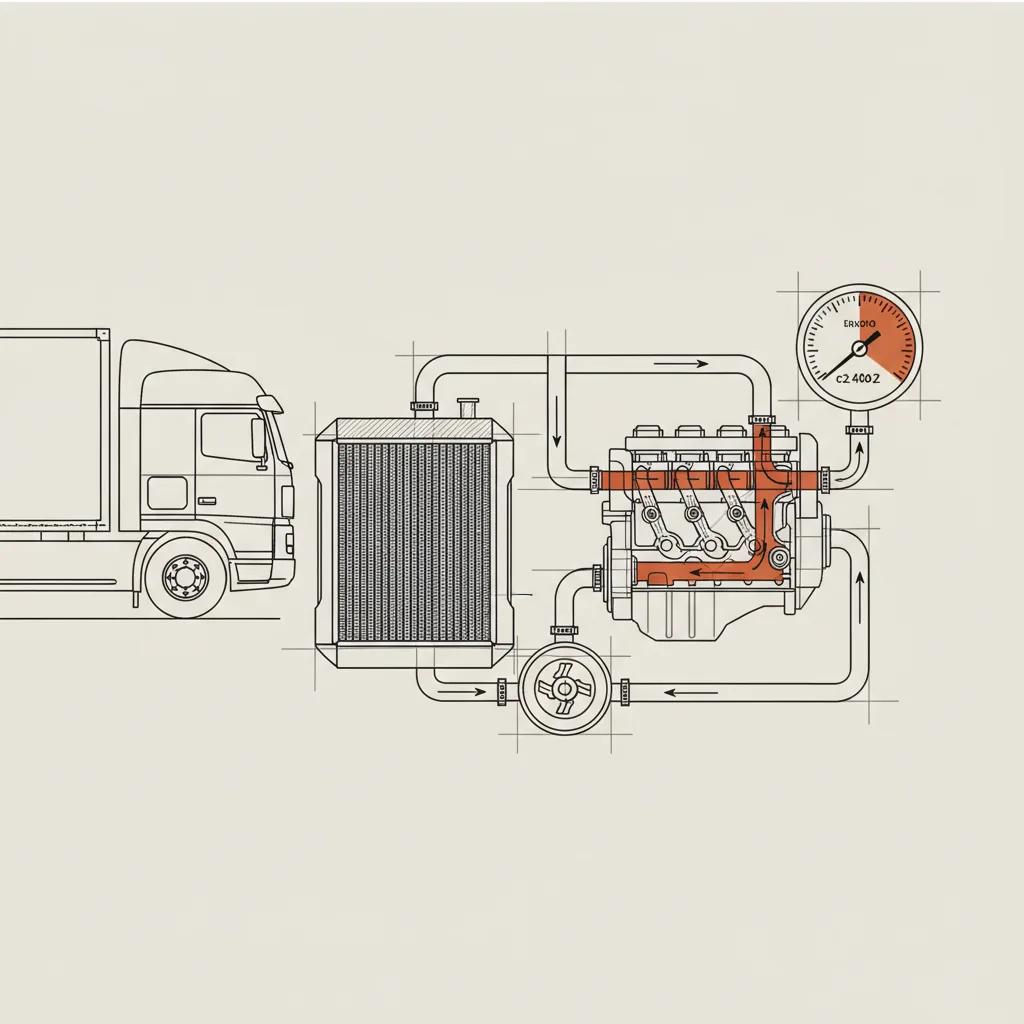
A semi truck overheats when its cooling system can no longer move enough heat away from the engine. The most common causes are low or leaking coolant, a clogged or bug-packed radiator, a failing water pump, a stuck thermostat, and a slipping or broken fan or belt. Catching a climbing temperature gauge early and shutting down before the engine reaches the red zone is what separates a quick roadside fix from a cracked head or a scrapped engine.
For diesel trucks pulling grades on I-5, I-80, US-50, or CA-99 in the Sacramento Valley heat, the cooling system works hard. Below is a practical breakdown of why semi truck overheating happens, the signs to act on, and the maintenance that keeps your truck off the shoulder.
What Causes a Semi Truck to Overheat
Overheating is almost always a symptom of one failing part in the cooling system, not the engine itself. Diesel engines run hot by design, and the cooling system has to shed that heat constantly. When one link breaks down, coolant temperature climbs fast.
Low or leaking coolant
Coolant is the foundation of the whole system. If the level drops, there is simply less fluid to carry heat to the radiator. Leaks are the usual culprit and can come from:
- Worn or cracked radiator and heater hoses
- A leaking water pump seal or weep hole
- A failing radiator with corroded tubes or seams
- A blown head gasket pushing combustion gases into the coolant
- A loose or worn radiator cap that won't hold system pressure
A truck that needs coolant topped off regularly has a leak that needs to be traced, not just refilled.
A clogged or restricted radiator
The radiator can fail two ways. Inside, scale and corrosion build up over years and block coolant flow through the tubes. Outside, bugs, road grime, and debris pack the fins and choke off airflow. In summer, a dirty radiator face is one of the most common reasons a truck overheats on a long pull even when everything else checks out.
A failing water pump
The water pump circulates coolant through the block and radiator. When the impeller wears, the bearing fails, or the shaft seal leaks, circulation drops and temperature spikes, especially under load. A whining noise, a coolant trail from the weep hole, or play in the pump pulley all point to a pump on its way out.
A stuck thermostat
The thermostat regulates how much coolant flows to the radiator. If it sticks closed, coolant gets trapped in the engine and temperature climbs quickly. A thermostat stuck open causes the opposite problem and the engine runs too cool, which hurts fuel economy and emissions performance. Thermostats are inexpensive parts that cause expensive damage when ignored.
Cooling fan and belt problems
Many heavy trucks use a fan clutch that engages the fan when coolant gets hot. If the clutch fails to engage, the fan won't pull enough air at low speed or when idling in traffic. A glazed, cracked, or loose serpentine belt slips and can't drive the water pump or fan properly. Belt and fan issues often show up first as overheating in stop-and-go conditions while highway running stays normal.
Other contributors
- A failing fan clutch that stays disengaged
- Air trapped in the cooling system after a recent service
- A radiator cap that no longer holds rated pressure, lowering the coolant's boiling point
- Heavy loads on long grades in high ambient temperatures, which push a marginal system over the edge
Warning Signs of Semi Truck Overheating
The goal is to catch overheating before the gauge buries itself in the red. Watch for these signs and treat them as a reason to slow down and inspect:
- A coolant temperature gauge that climbs higher than normal or keeps rising on a grade
- A high-temperature warning light or an engine derate that cuts power to protect the engine
- Steam or a sweet coolant smell from under the hood
- Coolant spots or puddles where the truck parks
- Reduced heater output or air that turns cold, which can signal low coolant
- A whining, grinding, or squealing noise from the front of the engine
If the gauge enters the danger zone or the engine derates, get to a safe spot, shut down, and let it cool. Continuing to drive a hot diesel risks warped heads, a blown head gasket, and seized internals. Never open a hot pressurized radiator or surge tank cap.
How to Prevent Semi Truck Overheating
Most overheating is preventable with steady cooling-system maintenance. The cooling system is easy to overlook because it works quietly until it doesn't.
Stay on top of coolant
- Check coolant level and condition during pre-trip inspections
- Test coolant freeze point and additive levels on a regular interval
- Flush and replace coolant per the engine manufacturer's service schedule
- Use the coolant type the manufacturer specifies and don't mix incompatible types
Keep the radiator and charge air cooler clean
- Inspect the radiator face for bugs, dirt, and bent fins, especially before summer
- Clean the radiator and charge air cooler when buildup restricts airflow
- Look for soft, swollen, or cracked hoses and replace them before they fail
Inspect the moving parts
- Check belt condition and tension; replace glazed or cracked belts
- Listen for water pump noise and check for weep-hole leaks
- Verify the fan clutch engages when the engine is hot
- Replace the thermostat and radiator cap as part of routine cooling service
Drive with heat in mind
- Watch the temperature gauge on long climbs in summer heat
- Back off the throttle and downshift early on grades rather than lugging the engine
- Reduce engine load if the temperature starts climbing instead of pushing on
Preventive maintenance is the cheapest insurance against a cooling failure. A scheduled coolant flush, hose replacement, and radiator cleaning cost far less than the engine damage an overheat can cause. Fleets can build these checks into a structured on-site fleet repair program so cooling service happens on a calendar instead of on the shoulder.
What to Do If Your Truck Overheats on the Road
If the temperature gauge spikes while you're driving:
- Get to a safe location off the roadway and shut the engine down
- Turn the cab heater to high to pull some heat off the engine while you slow down
- Let the engine cool before inspecting anything; do not open a hot pressurized cap
- Look for obvious leaks, a broken belt, or a packed radiator once it's safe
- If you can't find and safely fix the cause, call for help rather than risk the engine
A cooling problem far from the shop is exactly where mobile service helps. Rather than risking further damage by limping in, an on-site technician can diagnose and handle many cooling repairs where the truck sits. For broader engine concerns tied to overheating, diesel engine repair on site can address the root cause before it becomes a tow.
FAQ
Why does my semi truck overheat going up hills but not on flat roads?
Climbing a grade puts the engine under heavy load, which generates more heat, while lower road speed reduces natural airflow through the radiator. A marginal cooling system, such as a partly clogged radiator, a weak water pump, or a fan clutch that isn't fully engaging, will hold up on flat highway running but fall behind on a long climb in hot weather.
Can I keep driving if my temperature gauge is in the red?
No. A gauge in the red zone means the engine is at risk of serious damage like a warped head, a blown head gasket, or seized components. Pull over safely, shut the engine down, and let it cool. Continuing to drive a severely overheated diesel can turn a minor repair into a full engine rebuild.
How often should a semi's cooling system be serviced?
Follow the engine manufacturer's recommended service schedule for coolant flushes and additive testing. Beyond that, inspect coolant level, hoses, belts, and the radiator face during routine pre-trips and preventive maintenance, and clean the radiator and charge air cooler before the hot season.
Is it the thermostat or the water pump causing my truck to overheat?
Both can cause overheating, but the symptoms differ. A stuck thermostat usually causes temperature to climb steadily, often soon after startup, with no leak. A failing water pump often shows coolant at the weep hole, a whining or grinding noise, and overheating that gets worse under load. A proper diagnosis confirms which part is at fault before you replace anything.
Why is my coolant low if I don't see a leak?
Small external leaks can evaporate before they puddle, and an internal leak, such as a head gasket allowing coolant into the combustion chamber, won't leave a visible puddle at all. If you're adding coolant regularly with no obvious source, the system needs a pressure test to find where the coolant is going.
If your truck is running hot anywhere across the Sacramento metro or Northern California, including the I-5, I-80, US-50, and CA-99 corridors and cities like Elk Grove, Stockton, Davis, Woodland, Roseville, and Auburn, call 916 Truck Repair at (916) 898-9090 for 24/7 mobile dispatch. Our technicians come to your truck to diagnose and repair cooling problems on site so you can get back on the road.
 By Vladimir Sardari · Owner & Lead Technician