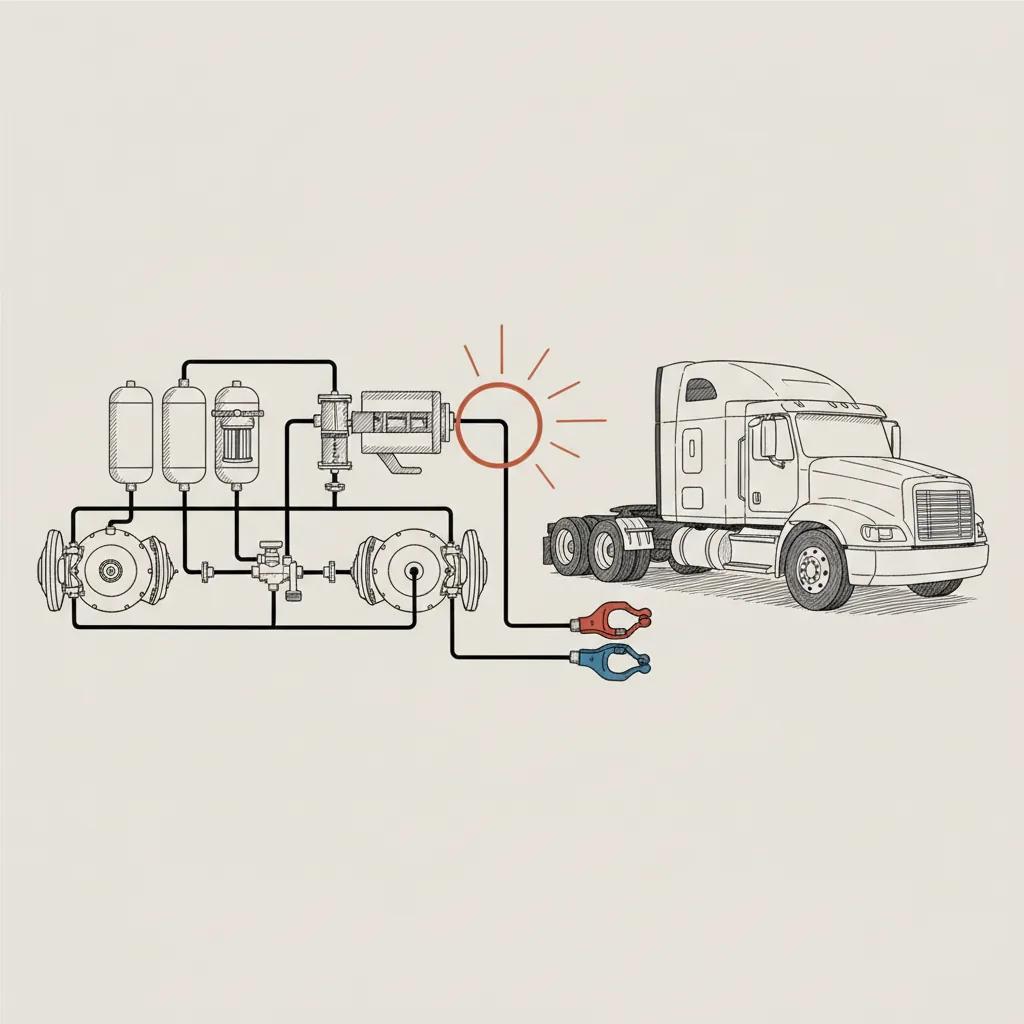
To troubleshoot an air leak on a semi truck, build the system to full pressure (around 120–125 psi on most rigs), shut the engine off, and listen. Pump the brakes to find where the hiss gets louder, then spray soapy water on fittings, glad hands, valves, and air chambers to spot the bubbles. The most common air brake leak points are loose or cracked fittings, worn glad hand seals, and failing diaphragms inside the brake chambers. Catching one early keeps a slow leak from turning into a no-go safety problem on the road.
Air is the lifeblood of a semi's braking and suspension. A small leak that you ignore at the yard can drop your pressure below the point where the spring brakes apply on their own, leaving you stranded on the shoulder of I-5 or CA-99. This guide walks owner-operators, fleet managers, and dispatchers through finding the leak, judging how serious it is, and deciding whether it's a roadside fix or a shop job.
How a Semi's Air Brake System Works (the Short Version)
Understanding the layout makes any air brake leak easier to chase down. The engine-driven compressor feeds air into the supply (wet) tank, then into the primary and secondary tanks. Dash gauges show pressure in both circuits. From there, air travels through valves, lines, and glad hands to the brake chambers at each wheel, where it pushes the pushrod and slack adjuster to apply the foundation brakes.
The system is designed to fail safe: if pressure drops too low, the spring brakes clamp on automatically. That's good for safety but bad for productivity, because a leak severe enough to trip that safeguard parks the truck until it's repaired.
Recognizing the Signs of an Air Brake Leak
You often hear or feel a leak before a gauge confirms it. Watch for:
- An audible hiss when the truck is parked and the engine is off, or a hiss that changes when you press the brake pedal
- The compressor cycling on far more often than normal to keep pressure up
- Air pressure that bleeds down quickly after shutdown instead of holding steady
- A low-air warning buzzer or light that comes on during normal driving
- Spring (parking) brakes that drag or apply unexpectedly at low pressure
The Federal Motor Carrier Safety Administration (FMCSA) requires drivers to perform a daily pre-trip inspection that includes checking the air brake system, so many leaks are first caught during that walk-around.
Step-by-Step: How to Find an Air Leak
1. Charge the System and Note the Pressure
Start the engine and let the compressor build the system to its governor cutout pressure (commonly in the 120–125 psi range). With the engine running you may not hear a small leak, so this step is mostly to confirm the system reaches and holds full pressure.
2. Run the Static Leak Test
Turn the engine off. With the parking brake released and the service brakes not applied, watch the dash gauges for one minute. Then apply and hold full pressure on the brake pedal and watch again. FMCSA's air brake test guidance describes allowable leakage rates that vary by vehicle type and whether the brakes are applied; if your pressure drops faster than the limit for your configuration, you have a leak to chase. When in doubt, treat a fast, obvious drop as a problem.
3. Listen, Then Confirm With Soapy Water
In a quiet area, follow the hiss. Once you're in the right zone, brush or spray a soapy water solution on suspect spots. Growing bubbles mark the exact leak. Check these areas in order:
- Glad hands between the tractor and trailer, including the rubber seals
- Air line fittings at the tanks, valves, and chambers
- Brake chambers themselves, where a torn diaphragm leaks
- Valves such as the relay, quick-release, and foot (treadle) valve
- Air tanks and drain valves, which can leak if the petcock or fitting is loose
- The compressor and governor, which can leak past worn seals
4. Check Both Tractor and Trailer
Don't forget the trailer side. A leak at the trailer's glad hands, lines, or trailer ABS and brake components affects the whole combination. Disconnecting and inspecting the glad hand seals is a quick win, since cracked or dirty seals are one of the most frequent culprits.
The Most Common Air Leak Points
Most air brake leaks trace back to a short list of parts:
- Glad hand seals — rubber seals harden, crack, or pick up debris and stop sealing
- Push-to-connect (DOT) fittings and air lines — nylon line that's chafed, kinked, or improperly seated at a fitting
- Brake chamber diaphragms — the internal rubber tears with age and heat cycling
- Valves — relay, quick-release, and treadle valves develop internal leaks
- Tank drain valves — left slightly open or corroded after draining moisture
- Compressor and governor — wear here can cause both leaks and poor pressure buildup
Moisture plays a big role. Water that collects in the tanks corrodes components and degrades seals, which is why draining the tanks regularly is part of good preventive maintenance.
When You Can Limp It vs. When You Must Stop
Not every hiss is an emergency, but air brakes are not a system to gamble with. Park the truck and get help if:
- The low-air warning activates while driving
- Pressure won't build to or hold normal operating range
- You hear a large, fast leak that the compressor can't keep up with
- The spring brakes apply or drag on their own
A slow leak that still lets the system hold pressure may get you to a safe location, but driving with a known air brake defect risks an out-of-service order at a weigh station and, more importantly, a brake failure. Brake defects are consistently among the most cited categories in FMCSA's annual roadside inspection data, so a leak is exactly the kind of thing inspectors look for.
Repairs Best Left to a Technician
Replacing a glad hand seal or tightening a fitting is within reach of many drivers. Other repairs call for proper tools and parts:
- Replacing brake chambers, especially spring brake (piggyback) chambers that store dangerous spring energy and require safe caging
- Diagnosing internal valve leaks and replacing relay or treadle valves
- Compressor or governor service
- Tracing intermittent leaks across the tractor-trailer that only appear under load
If the leak is at a chamber, valve, or anywhere in the foundation air brake repair system, a mobile technician can pressure-test, pinpoint, and replace the failed part on-site instead of you risking a tow. For drivers stuck on the road, roadside truck repair brings the diagnosis and parts to the shoulder so a slow leak doesn't end the day.
FAQ
How do I find an air leak on a semi truck?
Build the system to full pressure, shut the engine off, and listen for a hiss. Pump the brake pedal to change the sound, then spray soapy water on glad hands, fittings, valves, and brake chambers. The spot that bubbles is your leak.
How much air leakage is too much?
FMCSA's air brake test guidance sets allowable leakage rates that depend on the vehicle type and whether the service brakes are applied. As a practical rule, if pressure drops noticeably within a minute during a static test, you have a leak that needs attention. Check the limits for your specific vehicle configuration.
Can I drive with a small air leak?
It depends on severity. If the system still builds and holds normal pressure and the low-air warning stays off, you may be able to reach a safe place for repair. If pressure won't hold, the warning activates, or the spring brakes drag, stop and get it fixed. A known brake defect can also trigger an out-of-service order during a roadside inspection.
What is the most common cause of an air brake leak?
Worn or damaged glad hand seals and loose or cracked air line fittings are among the most common causes, followed by torn brake chamber diaphragms. Trapped moisture in the tanks accelerates seal and component wear over time.
Why does my air compressor keep cycling?
Frequent compressor cycling usually means air is escaping somewhere, so the compressor works harder to maintain pressure. A leak is the most likely cause, though a worn compressor or governor can also be involved. Run a static leak test and inspect the common leak points.
Get Help With an Air Leak in Sacramento and Northern California
An air brake leak isn't something to push down the road. If you're hearing a hiss, watching your pressure bleed off, or stuck with a low-air warning, call 916 Truck Repair at (916) 898-9090 for 24/7 mobile dispatch. Our mobile technicians cover the Sacramento metro and Northern California corridors — I-5, I-80, CA-99, and US-50 — and reach Elk Grove, Stockton, Davis, Woodland, Roseville, and Auburn to pinpoint and repair air leaks on-site.
 By Vladimir Sardari · Owner & Lead Technician