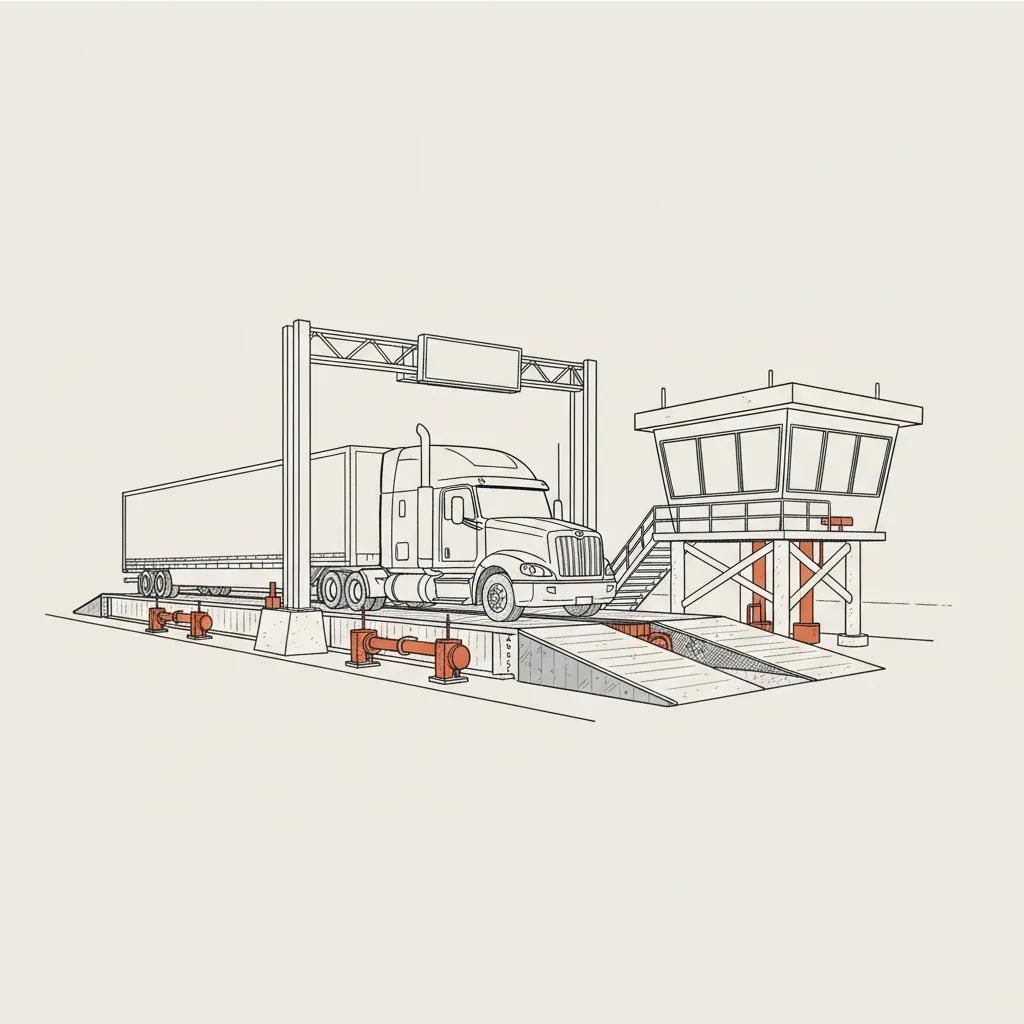
A Sacramento weigh station is a roadside facility where commercial trucks are checked for weight and, in many cases, pulled in for a safety inspection. In California, these stations are run by the California Highway Patrol (CHP), and a stop can lead to a Level I, II, or III inspection that checks brakes, tires, lights, the driver's documents, and hours of service. The fastest way to clear a station without delay is to roll across the scale legal on weight, with a truck and trailer that would pass a basic walkaround and paperwork that is current.
For owner-operators and fleet managers running the Sacramento Valley, weigh stations are part of the daily reality on I-5, I-80, US-50, and CA-99. Knowing what inspectors look for — and fixing the small stuff before it becomes a violation — keeps your trucks moving and your CSA scores clean.
How Weigh Stations Work in the Sacramento Region
California's commercial vehicle enforcement facilities (often called scales or weigh stations) are operated by the CHP. They sit along the major freight corridors feeding the Sacramento metro, and many trucks are pre-screened electronically through bypass programs before they ever reach the scale house.
When you approach a station, watch the signs and signals. If the lights tell you the scale is open, you are required to pull in unless you have a valid bypass signal in the cab. Station hours and staffing vary, and a station that is closed or in bypass mode one day may be fully staffed the next, so never assume a scale will be dark.
Weight vs. safety inspection
Two different things happen at a scale, and it helps to separate them:
- Weight check. Your gross vehicle weight and axle weights are measured against legal limits. Overweight loads, or weight distributed wrong across the axles, can mean a citation and a requirement to redistribute or offload before you continue.
- Safety inspection. An officer may direct you to a separate area for a North American Standard Inspection — the standardized roadside inspection used across the U.S. and Canada. This is where mechanical condition, driver credentials, and hours of service get examined.
What Triggers a DOT Inspection
Not every truck that crosses the scale gets inspected. Inspectors and the screening systems behind them are looking for risk signals. Common triggers include:
- Carrier risk score. TheFMCSA's Compliance, Safety, Accountability (CSA) program uses your Safety Measurement System data to flag carriers with poor records. A weak score makes your trucks more likely to be selected.
- Visible defects. A burned-out lamp, an obvious air leak, a flat or mismatched tire, a leaking wheel seal, or a load that looks unsecured can all draw an officer's attention.
- Out-of-date or missing documents. An expired registration, missing annual inspection sticker, or an obviously out-of-service driver record raises flags.
- Random and rotational selection. Some inspections are simply part of routine enforcement, including coordinated efforts like theCVSA's annual International Roadcheck.
- Overweight or mis-permitted loads. A weight problem at the scale frequently leads to a closer look at the rest of the vehicle.
The inspection levels you may face
The Commercial Vehicle Safety Alliance (CVSA) defines standardized inspection levels. The ones drivers encounter most are:
- Level I — the full inspection covering driver credentials and a detailed vehicle examination, including an under-vehicle check of brakes and components.
- Level II — a walkaround driver and vehicle inspection without going under the truck.
- Level III — a driver-only inspection of license, medical card, logs, and hours of service.
Common Out-of-Service Items
An out-of-service (OOS) violation means the truck, trailer, or driver cannot continue until the problem is corrected. According to the FMCSA and CVSA, brake-related defects are consistently among the most common vehicle out-of-service violations found at roadside. The categories that put trucks out of service most often include:
- Brake system defects. Out-of-adjustment brakes, worn linings, cracked drums, air leaks, and inoperative components. Brakes are the single biggest source of vehicle OOS orders.
- Tires. Tread below the legal minimum, exposed cords or fabric, flats, and visible damage.
- Lighting. Inoperative required lamps on the tractor or trailer, especially brake and turn signals.
- Cargo securement. Loose, missing, or insufficient tie-downs and straps.
- Steering and suspension. Cracked or broken components, loose parts, and excessive play.
- Driver violations. Hours-of-service problems, no valid CDL or medical certificate, and false or missing logs.
The pattern is clear: most OOS items are things a driver or shop can catch in a careful pre-trip and fix before a scale ever sees them.
How to Stay Compliant
Staying clean at a Sacramento-area scale is mostly about discipline before the trip, not luck at the window.
Before you roll
- Do an honest pre-trip every day. Walk the lights, thump or gauge the tires, look for air leaks and fluid drips, and check that the load is secured.
- Keep credentials current and in the cab: registration, annual inspection documentation, your CDL, and medical card.
- Stay on top of hours of service and keep your ELD logs accurate.
- Watch your CSA / Safety Measurement System data so you know where your carrier stands before an inspector does.
Keep the brakes right
Because brakes drive so many out-of-service orders, they deserve special attention. Out-of-adjustment slack adjusters, thin linings, and slow air buildup are exactly the items that turn a routine scale stop into a downtime event. A periodic, thorough brake check — including a proper DOT brake inspection in Sacramento — catches the defects that inspectors are trained to find.
Fix defects before the scale does
If a pre-trip turns up a problem on the road or in the yard, get it handled before you push on toward a corridor with active scales. For fleets running multiple trucks across the Sacramento Valley, on-site fleet repair in Sacramento means a technician can come to your yard or the roadside to correct brake, light, air, and tire issues without pulling the unit out of service for a shop visit. Correcting a defect on your terms is always cheaper than an OOS order and a CSA hit.
What Happens If You're Placed Out of Service
If an inspector issues an out-of-service order, the truck legally cannot move until the cited defect is repaired. That usually means arranging a repair at or near the inspection site. Plan for it the same way you plan for any breakdown:
- Get the exact violation in writing so the repair targets the right component.
- Arrange a qualified mobile or roadside repair so the fix is done correctly the first time.
- Keep documentation of the repair to show the defect was corrected.
FAQ
Do I have to stop at every weigh station in the Sacramento area?
If the station is open and you do not have a valid electronic bypass signal, yes — California requires commercial vehicles to enter open scales when directed. Watch the roadside signs and signals as you approach.
What is the most common reason trucks are placed out of service?
The FMCSA and CVSA report that brake-related defects are consistently among the most common vehicle out-of-service violations found during roadside inspections, alongside tire, lighting, and cargo securement problems.
What's the difference between a weight check and a DOT inspection?
A weight check measures your gross and axle weights against legal limits. A DOT inspection is a separate safety inspection of the vehicle, the driver's documents, and hours of service, and can be conducted at Level I, II, or III.
Can a mobile mechanic fix an out-of-service violation?
Yes. A qualified mobile technician can repair many common OOS items — brakes, lights, air leaks, and tires — at or near the inspection site so the truck can be returned to service once the defect is corrected and documented.
How do I lower my chances of being selected for inspection?
Keep your FMCSA CSA score healthy, run trucks that pass a careful pre-trip, keep all credentials current, and stay compliant on hours of service. Clean trucks and clean records are selected less often.
If a pre-trip turns up a brake, air, light, or tire defect — or you're stuck with an out-of-service order on I-5, I-80, US-50, or CA-99 — 916 Truck Repair offers 24/7 mobile dispatch across Sacramento and Northern California, including Elk Grove, Stockton, Davis, Woodland, Roseville, and Auburn. Call (916) 898-9090 to get a technician to your truck.
 By Vladimir Sardari · Owner & Lead Technician