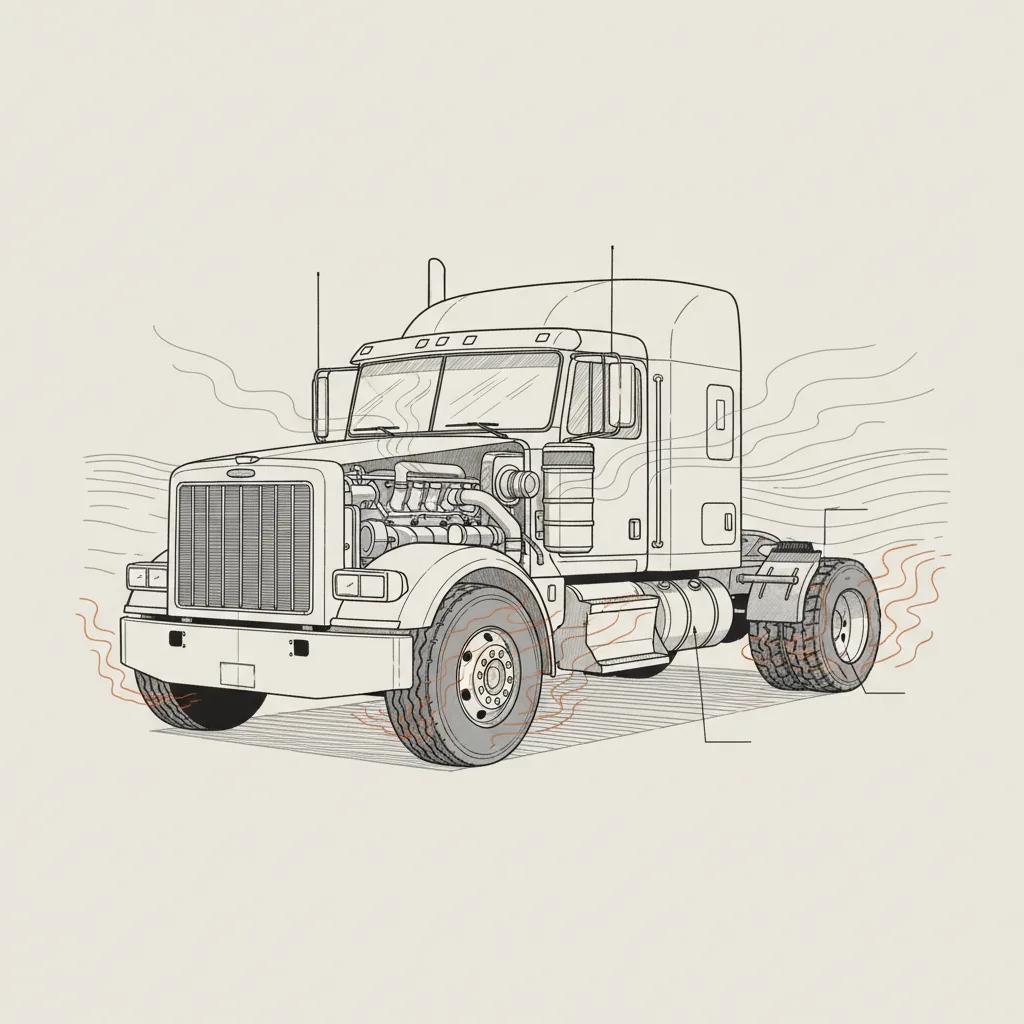
Most summer truck breakdowns in the Sacramento Valley trace back to heat overwhelming a system that was already marginal: a tired radiator, an underinflated tire, an aging battery, or a clogged DEF circuit. When ambient temperatures climb past 100°F on I-5, I-80, and CA-99, the margin for error disappears, and small problems become roadside failures fast. The fix is almost always preventive: catch the weak component before the heat finds it for you.
The Sacramento Valley is one of the hottest freight corridors in Northern California. Summer afternoons routinely sit in the high 90s to triple digits, and the heat radiating off the asphalt around the Stockton, Elk Grove, and Woodland stretches adds even more thermal load. Combine that with grades climbing toward Auburn on I-80 and heavy stop-and-go around the metro, and you have ideal conditions for heat-driven component failure.
Why Summer Heat Causes More Truck Breakdowns
Heat does not create new problems out of nothing. It accelerates the failure of parts that are already worn, dirty, or out of spec. A cooling system that holds up at 75°F can run out of headroom at 105°F. A battery weakened over months of service can quit on the first brutal afternoon. The Valley's sustained high temperatures simply remove the cushion that masks these weaknesses the rest of the year.
Three factors stack up in summer along the local corridors:
- Sustained ambient heat. Long-haul runs down I-5 mean hours at full load with no cool-down, so heat keeps building in the engine, driveline, and tires.
- Grade and load. Climbs east on I-80 toward Auburn and the Sierra foothills force the engine and cooling system to work hardest exactly when the air is hottest.
- Stop-and-go traffic. Congestion around Sacramento, US-50, and the CA-99 corridor reduces airflow through the radiator and condenser, which is when overheating and A/C complaints spike.
The Most Common Heat-Related Failures
Cooling System Overheating
The cooling system is the first thing summer heat exposes. A radiator packed with bugs and road grime, a failing water pump, a stuck thermostat, a worn fan clutch, or low coolant will all show up as a climbing temperature gauge on a hot grade. Once a heavy diesel starts to overheat, continuing to drive risks warped heads, blown head gaskets, and catastrophic engine damage.
Watch for these warning signs before the gauge redlines:
- Coolant temperature creeping higher than normal on climbs or in traffic
- Sweet smell of coolant or visible steam from the hood
- Coolant spots under the truck after a stop
- The engine derating or pulling power to protect itself
If the temperature is climbing, get off the freeway and shut down before damage occurs. Topping off a hot system or chasing a coolant leak on the shoulder of I-5 is exactly the kind of work suited to mobile truck repair, where a technician comes to the truck instead of risking a tow.
Tire Blowouts
Heat is a tire's enemy. As the Valley pavement temperature climbs, the air inside an underinflated or overloaded tire expands and internal temperatures rise, which is why tire debris piles up on the shoulders of I-5 and CA-99 every summer. Underinflation is the leading cause: a soft tire flexes more, builds more heat, and fails. The U.S. Department of Transportation, throughNHTSA, has long emphasized that proper inflation is the single most important factor in preventing blowouts.
To reduce summer blowout risk:
- Check cold inflation pressure against the manufacturer's spec before the first run of the day, not after the tires have heated up
- Inspect for sidewall bulges, uneven wear, and embedded debris
- Watch the duals — a quietly flat inner tire overloads its mate and cooks both
- Don't bleed air out of a hot tire to "correct" pressure; that leaves it dangerously underinflated once it cools
Dead and Weak Batteries
Most drivers associate dead batteries with winter, but summer is harder on them. Extreme heat accelerates the chemical wear and fluid evaporation inside a battery, shortening its life and leaving it unable to crank on a hot morning. A battery that survived the spring can fail without much warning once Valley temperatures spike. Corroded terminals, loose connections, and a charging system that can't keep up make it worse.
If the truck cranks slowly, the lights dim, or the dash flickers, have the batteries and charging system load-tested before you're stranded. When a truck won't start at a Stockton or Elk Grove yard, a heavy-duty jump start can get it moving while a technician diagnoses whether the real culprit is the battery or the alternator.
Failing Air Conditioning
A/C is more than comfort — driver fatigue and heat stress are genuine safety issues during a long triple-digit afternoon on I-5. Summer is when weak A/C systems finally give out. Common causes include low or leaking refrigerant, a failed compressor, a clogged condenser, blower motor problems, and electrical faults. A condenser caked with the same debris that chokes the radiator will struggle to shed heat in stop-and-go traffic.
If the A/C blows warm, cycles oddly, or makes new noises, get it checked early in the season. Cab cooling problems often share root causes with engine cooling and electrical issues, so it's worth diagnosing together.
DEF and Emissions Problems
Heat affects the diesel exhaust fluid (DEF) and after-treatment system too. Diesel exhaust fluid degrades when stored at high temperatures for extended periods, and theEPAnotes that DEF should be kept out of prolonged heat to preserve its chemistry. Degraded or contaminated DEF can trigger faults in the SCR system. On top of that, summer heat stresses DEF pumps, lines, and sensors, and a fault here can put the truck into a derate that limits speed until it's addressed.
Watch for DEF and SCR warning lights, a sudden power derate, or quality faults. These need diagnosis with the right scan tools — not guesswork — and never an emissions delete, which is illegal under federal law. A clogged or faulty after-treatment system should be properly repaired.
Preventing a Summer Truck Breakdown
The theme across every heat failure is the same: the heat exposes what was already weak. A pre-summer inspection catches most of it.
- Cooling system: Pressure-test the system, check coolant condition and concentration, inspect hoses and the water pump, and clean debris off the radiator and charge-air cooler.
- Tires: Verify cold pressures, rotate as needed, and replace anything with sidewall damage or low tread before the heat finds it.
- Batteries and charging: Load-test batteries, clean and tighten terminals, and confirm the alternator is charging to spec.
- A/C and condenser: Check refrigerant charge, clean the condenser, and confirm the blower and controls work before the first heat wave.
- After-treatment: Address any standing DEF, DPF, or SCR fault codes, and store DEF properly out of prolonged heat.
For fleets running the Sacramento, Stockton, and Woodland lanes, scheduling these checks before the worst of summer is far cheaper than a roadside failure and a load sitting on the shoulder. When a breakdown does happen on I-5, I-80, CA-99, or US-50, roadside truck repair can handle many heat-related failures on-site so you avoid an unnecessary tow.
FAQ
What is the most common summer truck breakdown?
Cooling system overheating and tire blowouts are the most common heat-related breakdowns. Both are usually caused by a component that was already marginal — a dirty radiator or an underinflated tire — that fails once sustained high temperatures remove the safety margin.
Why do truck batteries fail in summer?
Extreme heat accelerates internal chemical wear and fluid evaporation inside a battery, which shortens its life and reduces cranking ability. A battery that worked fine in spring can fail on a hot morning, especially with corroded terminals or a weak charging system.
How does heat affect DEF and the emissions system?
Diesel exhaust fluid degrades when stored in prolonged high heat, and degraded or contaminated DEF can trigger SCR system faults. Summer also stresses DEF pumps, lines, and sensors. A fault can put the truck into a derate, so warning lights should be diagnosed promptly and never resolved with an illegal emissions delete.
Can a mobile mechanic fix an overheating truck on the highway?
Many heat-related failures — coolant leaks, hose and belt failures, dead batteries, and some cooling repairs — can be handled on-site by a mobile technician, which avoids a tow. Severe engine damage from prolonged overheating may still require a shop, so shutting down early matters.
When should I prep my truck for Sacramento Valley summer heat?
Schedule a cooling, tire, battery, A/C, and after-treatment inspection before the first sustained heat wave — typically late spring. Catching weak components early is far less costly than a breakdown on I-5, I-80, or CA-99 during a triple-digit afternoon.
If heat takes your truck out anywhere across the Sacramento metro or Northern California, 916 Truck Repair offers 24/7 mobile dispatch along the I-5, I-80, CA-99, and US-50 corridors. Call (916) 898-9090 and a technician can come to your truck.
 By Vladimir Sardari · Owner & Lead Technician