Blog Post
Heavy Truck Radiator Problems in Summer Heat
Why heavy truck radiators fail in summer heat, the warning signs to watch for, and when a truck radiator repair beats limping to the next exit.
 By Vladimir Sardari · Owner & Lead Technician
 Why heavy truck radiators fail in summer heat, the warning signs to watch for, and when a truck radiator repair beats limping to the next exit.
By Vladimir Sardari · Owner & Lead Technician 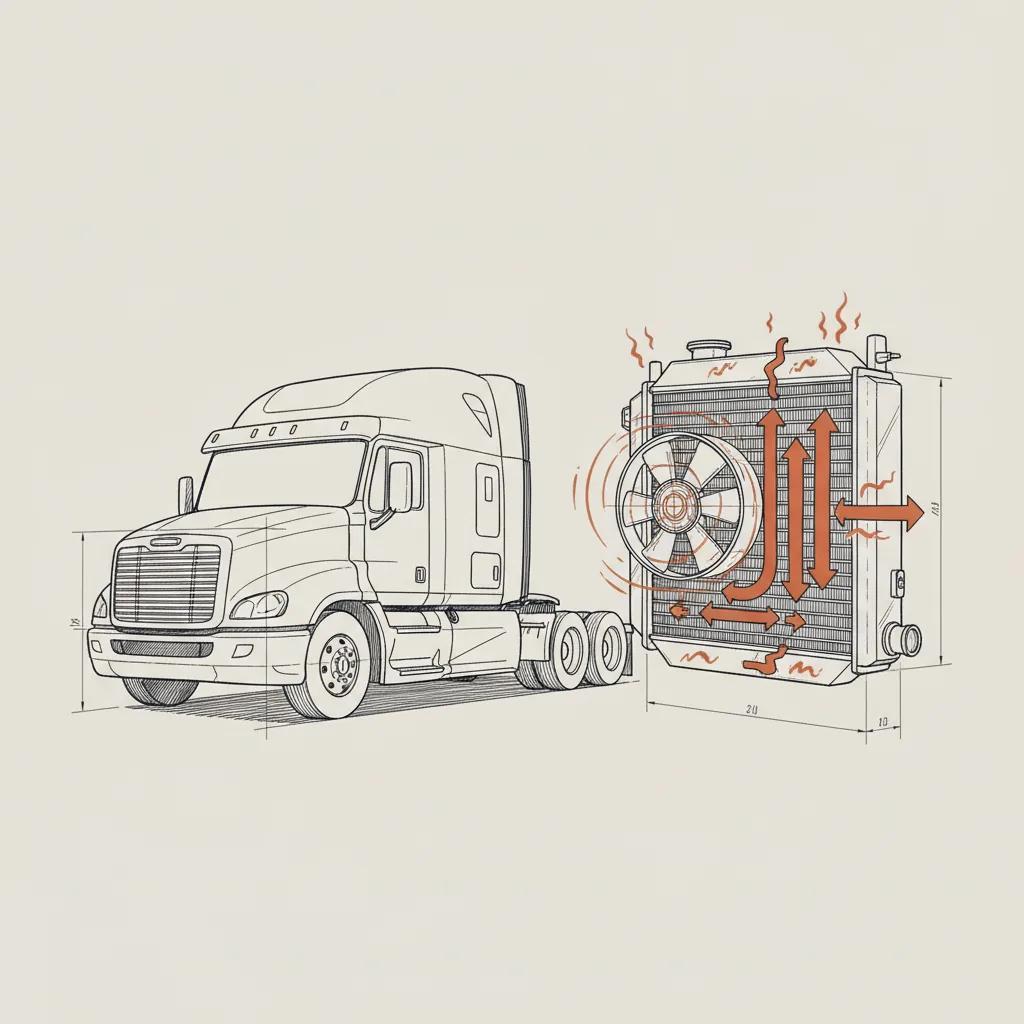
Heavy truck radiators fail in summer heat because high ambient temperatures, heavy loads, and grades push the cooling system to its limit, exposing any weakness, a clogged core, a weak fan, low coolant, or a tired water pump, that the system masked in cooler weather. The radiator's job is to shed engine heat into the passing air, and when the air is already 100°F-plus and the core is partly blocked, coolant temperature climbs fast. The fix is almost always a truck radiator repair or service rather than just topping off coolant, because an overheating event in summer can warp a head or crack a block in minutes.
If your temperature gauge is creeping up on a hot afternoon climb, treat it as a real problem, not a quirk of the weather. Below is what goes wrong with heavy truck radiators in the heat and what to do before a hot gauge becomes a destroyed engine.
A cooling system works by maintaining a temperature difference between the coolant and the outside air. The hotter the air, the smaller that difference, and the harder the radiator has to work to dump the same heat. Summer stacks several stresses at once:
In the Sacramento Valley, summer afternoons regularly run over 100°F, and routes like the I-80 grade toward the Sierra or long US-50 pulls combine heat, load, and elevation, where a marginal radiator finally shows itself.
Most summer overheating traces back to a handful of failure points. Which one you have determines whether it's a roadside fix or a shop job.
The most common heat-season culprit is a core that can't breathe. Bugs, dust, chaff, and road film pack the fins on the outside, while scale and rust plug the tubes inside. Either way, less heat moves into the air.
Leaks lower the coolant level and let air into the system, and air doesn't carry heat the way liquid does. Summer pressure and heat expose seams and hoses that held fine all winter. Watch for seepage at the radiator tanks, the lower hose, the water pump weep hole, and any clamp. A persistent low-coolant condition with no obvious puddle can point to a more serious internal leak.
The water pump circulates coolant through the engine and radiator. A worn impeller, leaking seal, or slipping drive cuts flow, so coolant lingers in the engine and overheats. Signs include a whine or growl from the front of the engine, coolant weeping from the pump, and overheating that worsens at low rpm.
A thermostat stuck closed blocks coolant from reaching the radiator at all, causing a fast climb to overheating even on a mild day. Stuck open usually causes slow warm-up, but a partly stuck unit can still leave you short on cooling under load.
At low speed and on grades, the engine fan provides most of the airflow. A fan clutch that won't engage, a damaged fan, or a slipping belt drive means the radiator gets little air right when it needs the most. Overheating that appears in stop-and-go traffic or on a slow climb but clears at highway speed often points here.
The pressure cap raises the coolant's boiling point and holds system pressure. A weak cap lets the system boil over early and lose coolant, a cheap part that's easy to overlook.
Catching a cooling problem early is the difference between a service call and a rebuild. Watch for:
If the gauge goes into the red, get off the road and shut down before damage occurs. Continuing to drive an overheating diesel risks a warped head, a blown head gasket, or a cracked block, all far costlier than the radiator that started it.
If your temperature is climbing on a hot day, act before it spikes:
Topping off coolant might get you moving, but if the cause is a clogged core, a weak water pump, or a leak, the problem comes right back, usually at the worst spot on the route. A proper diagnosis at the truck prevents a second breakdown.
Some cooling problems are roadside fixable; others need shop tools and parts. A mobile technician can pressure-test the system, check fan and water pump operation, replace hoses and clamps, and clean a core at the roadside or your yard. A cracked radiator tank, a plugged core needing flushing or replacement, or overheating that has already damaged the engine calls for more involved work.
Because belts and hoses fail right alongside radiators in the heat, a cooling job often goes hand in hand with belt and hose replacement, the serpentine belt that drives the water pump and fan, plus the radiator hoses that crack and swell with age. And if an overheating event has already affected engine performance, diesel engine repair service can assess head, gasket, and block condition before you put the truck back to work.
Most heat-season breakdowns are preventable with a little spring prep:
Building these checks into preventive maintenance is far cheaper than a roadside overheat in August.
High summer air temperatures shrink the gap between coolant and outside air, leaving the radiator with no reserve cooling capacity. A core, water pump, fan, or coolant problem that the system could mask in cool weather suddenly can't keep up under heat and load, so the temperature climbs.
A blocked core is the most common heat-season cause, debris packing the fins outside or scale plugging the tubes inside. Coolant leaks, a weak water pump, a stuck thermostat, and fan or fan-clutch failures are the other frequent culprits.
No. Continuing to drive an overheating diesel risks a warped head, a blown head gasket, or a cracked block within minutes, repairs far costlier than the original cooling fault. Get off the road safely and shut down before the gauge reaches the red.
Never open a pressurized radiator cap while the engine is hot. The coolant is above its normal boiling point under pressure and can erupt and cause severe burns. Let the system cool completely first, or check the overflow reservoir instead.
Many cooling problems can be diagnosed and repaired on site, pressure-testing, replacing hoses, clamps, caps, thermostats, and water pumps, and cleaning a clogged core. A cracked radiator needing full replacement, or engine damage from a prior overheat, may require more extensive shop work.
If your temperature gauge is climbing or you're stranded with an overheating engine, 916 Truck Repair provides mobile, on-site truck radiator repair and cooling-system service. Call (916) 898-9090 for 24/7 mobile dispatch across Sacramento and Northern California, including the I-5, I-80, CA-99, and US-50 corridors.
Mobile truck repair for highway breakdowns, truck stops, fleet yards, docks, and roadside service calls.
Call (916) 898-9090