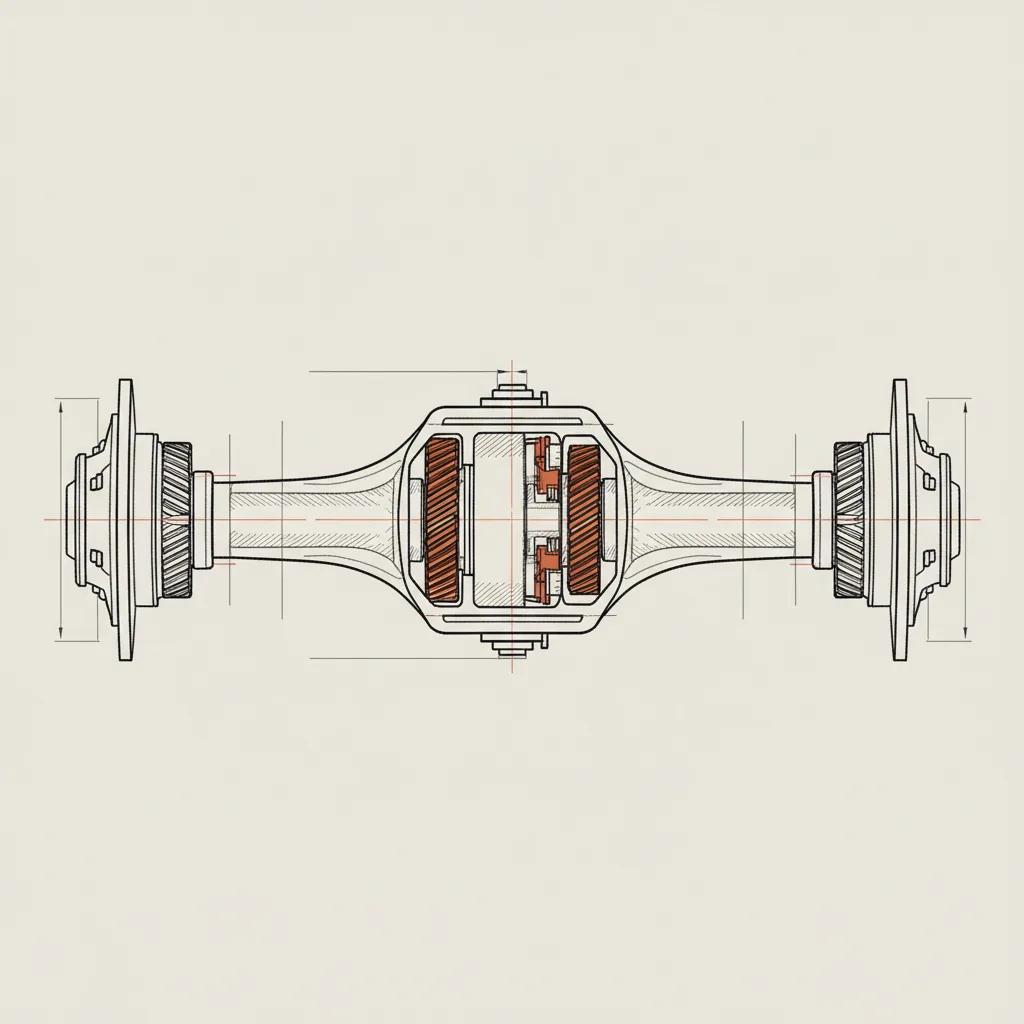
Differential noise on a semi usually means a problem inside the rear axle's gear set, bearings, or lubrication. A steady howl or whine that changes with speed often points to worn ring-and-pinion gears or low gear oil, while a clunk on acceleration or deceleration commonly indicates worn bearings, excessive backlash, or a failing differential carrier. Any new differential noise should be diagnosed promptly, because a complete differential failure can lock a drive axle and strand the truck.
For owner-operators and fleet managers, the differential is one of the most expensive drivetrain components to replace, so catching a noise early is the difference between a manageable repair and a major rebuild. This guide breaks down what each type of differential noise means, how it's diagnosed, and what to do when you hear it.
What the Differential Does and Why It Makes Noise
The differential sits in the drive axle and splits engine power from the driveshaft to the wheels, allowing the left and right wheels to turn at different speeds through corners. Inside, a ring-and-pinion gear set, spider gears, and several bearings work under constant heavy load, bathed in gear oil.
When any of those parts wear or lose lubrication, the precise mesh between gears breaks down. That changing contact pattern is what you hear as a howl, whine, or growl. Because the noise is tied directly to gear and bearing condition, the type of noise and when it happens are the most useful clues to what's failing.
Common Causes of Differential Noise
Worn Ring-and-Pinion Gears
The ring-and-pinion is the heart of the differential. As the gear teeth wear, the contact pattern shifts and the gears begin to howl. This noise:
- Rises and falls with road speed, not engine RPM
- Often differs between acceleration ("drive") and coasting ("coast")
- Gets louder as wear progresses
Worn gears frequently trace back to a history of low gear oil, contamination, or extended overloading.
Failing Bearings
The pinion bearings and carrier bearings support the spinning gears. When they wear out, they produce a rumbling, growling, or whirring sound that:
- Is constant and tied to wheel speed
- May be present whether you're accelerating, coasting, or holding steady
- Can change pitch when the truck is loaded versus empty
Bearing failure is common because bearings take the brunt of vibration and heat over high mileage.
Low or Contaminated Gear Oil
Gear oil cools and protects everything inside the axle. A leak, a missed service interval, or water contamination starves the gears and bearings of lubrication, causing heat, accelerated wear, and noise. Low oil is one of the most preventable causes of differential damage. Catching a seal leak early often prevents a far larger gear-set failure later.
Excessive Backlash or Improper Setup
Backlash is the small amount of play between the ring and pinion teeth. Too much play, often from wear or from a previous repair that wasn't set up to spec, produces a clunk when you shift between accelerating and coasting. This is sometimes felt as a "thud" through the floor when easing on and off the throttle.
Damaged Spider Gears
The spider (side) gears inside the differential case let the wheels turn at different speeds. Damage here, often from wheel-spin abuse or a broken tooth, can cause clicking or clunking that's most noticeable during tight turns.
How to Tell What the Noise Means
The way the noise behaves narrows the cause considerably:
- Howl or whine that changes with speed: Worn ring-and-pinion gears or low gear oil.
- Constant rumble or growl tied to wheel speed: Worn pinion or carrier bearings.
- Clunk when shifting between accelerate and coast: Excessive backlash or worn U-joints in the driveshaft feeding the axle.
- Clicking or clunking during turns: Damaged spider gears or a failing differential carrier.
- Noise only under load or only when empty: Often bearing wear, where load changes the contact pattern.
One important note: drivetrain noise can be misleading. A worn driveshaft U-joint, a failing wheel bearing, or even certain tire wear patterns can mimic differential noise. That's why a proper diagnosis matters before any parts are replaced.
How a Differential Problem Is Diagnosed
A technician typically works through a sequence to isolate the source:
- Road test at the speeds and conditions where the noise appears, noting whether it occurs on drive, coast, or both.
- Gear oil inspection for level, contamination, and metal shavings on the drain plug magnet, which is a strong sign of internal wear.
- Backlash and end-play checks with a dial indicator to measure gear play against spec.
- Visual inspection of the ring-and-pinion contact pattern, bearings, and case once the cover or carrier is opened.
- Ruling out look-alike sources such as wheel bearings, U-joints, and tires.
Because much of this requires getting under a loaded truck, mobile diagnosis on-site is often the most practical first step for a driver who'd rather not risk driving a noisy axle to a shop.
What to Do When You Hear It
Differential noise rarely fixes itself, and continuing to drive on a failing axle risks a complete lockup that can damage tires, the driveshaft, and the axle housing all at once. Practical steps:
- Don't ignore a new noise. Note when it happens and at what speed.
- Check for a gear oil leak around the axle and pinion seal if you can do so safely.
- Avoid heavy loads and high speeds until it's inspected, especially if you feel any vibration or clunking.
- Get a diagnosis early. A bearing or seal caught in time is far cheaper than a full differential rebuild.
If the noise is severe, accompanied by vibration, or paired with any difficulty in the drivetrain, treat it as urgent and stop driving rather than risk being stranded.
What Affects the Cost of a Differential Repair
We don't quote prices online because every job is different, but the main factors that drive differential repair cost include:
- Whether it's a bearing/seal fix or a full gear-set replacement. Replacing a worn ring-and-pinion is far more involved than repinning a seal.
- Single versus tandem (dual) drive axles, since some trucks have two differentials.
- Parts availability for the specific axle make and ratio.
- Collateral damage if the truck was driven hard after the noise started.
- On-site versus shop repair and the labor time the specific axle requires.
Addressing the noise early is the single biggest cost-saver, because it keeps a small repair from cascading into a complete axle rebuild.
FAQ
Can I keep driving a semi with differential noise?
It's risky. A light, new noise may give you some time, but differential failure can be sudden and can lock a drive axle. Any noise paired with vibration, a clunk, or a smell of hot gear oil should be treated as a reason to stop and get it inspected.
Is a differential howl always the gears?
Not always. A howl or whine that changes with speed most often comes from worn ring-and-pinion gears or low gear oil, but bearings, U-joints, and tire wear can produce similar sounds. A proper diagnosis confirms the source before parts are replaced.
What does it mean if there are metal shavings in the gear oil?
Fine metal on the drain plug magnet is normal in small amounts, but heavy shavings or chunks indicate active internal wear of the gears or bearings. That's a strong signal the differential needs to be opened and inspected soon.
How often should differential gear oil be changed?
Intervals vary by axle manufacturer and duty cycle, so follow your axle maker's service recommendations. Severe-duty, high-mileage, and heavy-haul operations generally need more frequent changes. Checking the oil level and watching for leaks between services helps prevent lubrication-related damage.
Can differential noise come from the driveshaft instead?
Yes. Worn U-joints or a failing carrier bearing in the driveshaft can produce clunks and vibration that feel like a differential problem. Diagnosis should rule out the driveshaft and wheel bearings before any axle work is done.
Get Differential Noise Diagnosed Before It Strands You
If your semi is howling, whining, or clunking from the rear axle, don't wait for it to fail on the road. 916 Truck Repair provides mobile differential repair across the Sacramento metro and Northern California, including the I-5, I-80, CA-99, and US-50 corridors. Call (916) 898-9090 for 24/7 mobile dispatch and get the noise diagnosed before it becomes a breakdown.
 By Vladimir Sardari · Owner & Lead Technician