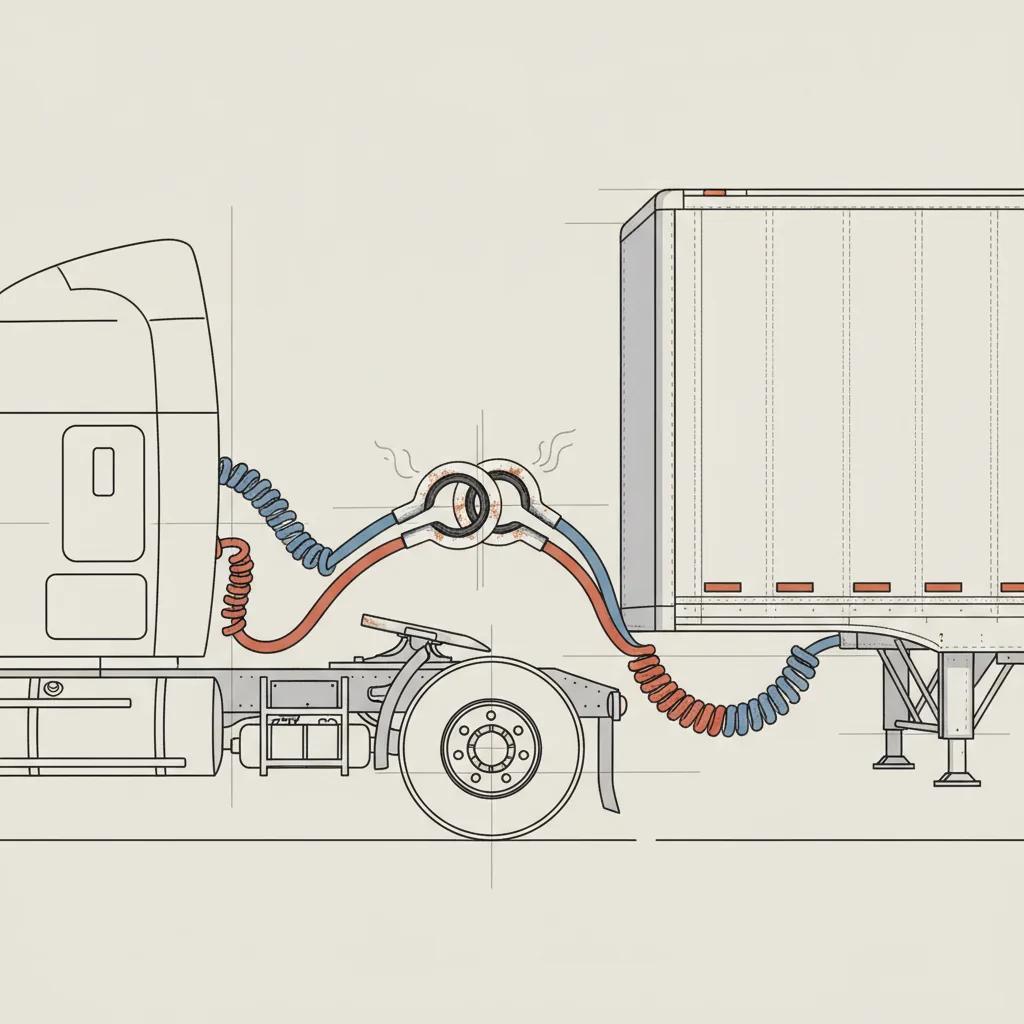
Gladhand problems and air line failures usually show up one of two ways: an audible air leak at the coupling that bleeds your system pressure, or trailer brakes that stay locked because the lines aren't passing air the way they should. The most common culprits are worn or torn gladhand seals, cracked or chafed air hoses, frozen or contaminated lines, and crossed or improperly seated connections. In most cases a roadside technician can replace a seal, splice or swap a damaged hose, and have you moving again within an hour.
For owner-operators and fleet drivers running the I-5, I-80, CA-99, and US-50 corridors around Sacramento, gladhand and air line issues are a frequent reason a trailer goes out of service. They're also among the most preventable. Understanding how the system works makes both diagnosis and prevention far easier.
What Gladhands and Air Lines Do
Gladhands are the coupling connectors that join the tractor's air supply to the trailer's brake system. There are two of them, and they are color-coded so they cannot be confused once you know the system:
- Red (emergency/supply line): Charges the trailer's air tanks and releases the spring brakes. Lose pressure here and the trailer's spring brakes apply automatically.
- Blue (service line): Carries the signal that applies the trailer brakes when the driver presses the brake pedal.
The air lines themselves are the hoses running from the gladhands to the trailer's brake valves and tanks. A rubber seal (the gladhand polymer seal) sits inside each coupling face to make an airtight connection. That small seal is the single most common failure point in the entire system.
Common Gladhand Problems
Worn, torn, or missing seals
The gladhand seal is a wear item. Coupling and uncoupling thousands of times grinds it down, and grit, road salt, and heat accelerate the wear. A flattened, cracked, or missing seal lets air escape at the coupling face, which you'll often hear as a steady hiss when the system is charged. This is the number one source of slow air leaks at the connection.
Crossed or mismatched connections
Connecting the supply line to the service port (or vice versa) prevents the brake system from operating correctly. Color-coded gladhands and keyed couplers reduce this risk, but mismatched or aftermarket parts can still allow a crossed connection. Always confirm red-to-red and blue-to-blue before pulling.
Damaged or corroded coupling faces
The metal sealing face of the gladhand can become pitted, bent, or corroded after years of exposure and rough coupling. Even a fresh seal won't hold against a damaged face, so the gladhand body itself sometimes has to be replaced.
Dirt and debris in the coupling
Gladhands left uncoupled and unprotected pick up mud, gravel, and ice. That debris gets trapped against the seal, breaking the airtight fit. Dummy (dead-end) couplers exist specifically to keep dirt out of disconnected lines.
Common Air Line Failures
Chafed and cracked hoses
Air hoses that rub against the frame, fifth wheel, or each other will eventually chafe through. UV exposure and age also make rubber lines brittle and prone to cracking. A chafed line may hold pressure when new but blow out under a hard brake application.
Kinked or pinched lines
Lines that get pinched between the tractor and trailer during coupling, or kinked by a tight turn, restrict or block airflow. This can cause slow trailer brake response or brakes that won't fully release.
Frozen lines and water contamination
Moisture that collects in the air system can freeze in cold weather, blocking lines and valves. This is a real concern for trucks crossing the Sierra on I-80. A failing air dryer is usually the root cause, letting water into the system in the first place.
Fitting and connection leaks
The push-to-connect and threaded fittings where hoses meet valves and tanks loosen with vibration or develop leaks as the fittings age. These leaks are often small but persistent, and they add up to an air system that won't hold pressure overnight.
Symptoms That Point to Gladhand or Air Line Trouble
- A steady hiss of escaping air at the coupling or along a hose run
- Slow air pressure buildup, or pressure that won't reach normal operating range
- The low-air warning buzzer or light coming on while driving
- Trailer spring brakes that won't release after coupling
- Trailer brakes that drag, grab, or respond slowly
- Air pressure that bleeds down quickly when the truck is parked overnight
Any of these warrants a stop and an inspection. A trailer that loses supply-line pressure on the road will apply its spring brakes automatically, which is safe by design but can leave you stranded.
How These Failures Are Diagnosed and Repaired
A technician starts by charging the system and listening for leaks, often using soapy water to pinpoint the exact source at couplings and fittings. From there the typical repairs are straightforward:
- Seal replacement: A worn gladhand seal is a quick, inexpensive swap that solves the majority of coupling leaks.
- Hose replacement or splicing: Chafed, cracked, or blown lines are cut out and replaced with new air hose and fittings.
- Gladhand body replacement: A pitted or bent coupling face gets a new gladhand assembly.
- Air dryer service: If frozen or water-contaminated lines are the issue, the air dryer cartridge is replaced and the system is drained.
- Fitting repair: Loose or leaking fittings are tightened or replaced.
Because gladhand and air line issues fall under the same air-supply system as the rest of the trailer's brakes, it's smart to have the full system checked at the same time. A persistent leak can mask, or be caused by, a problem deeper in the air brake repair circuit. If your trailer is stuck on the shoulder, roadside truck repair can bring the parts and tools to you instead of waiting on a tow.
For drivers around Sacramento and across Northern California, 916 Truck Repair handles gladhand and air line repair on-site, 24/7. A mobile technician can diagnose the leak, replace the seal or hose, and verify the system holds pressure before you pull out.
Preventing Gladhand and Air Line Failures
Most of these failures are preventable with a few habits:
- Inspect seals at every pre-trip. Look for cracks, flattening, or debris on the gladhand faces and replace seals at the first sign of wear.
- Use dummy couplers. Cap disconnected lines to keep out dirt, water, and ice.
- Route and secure hoses properly. Make sure lines can't rub the frame or fifth wheel, and replace any hose showing chafe marks.
- Drain the air tanks regularly and service the air dryer to keep moisture out of the system.
- Check air buildup and leak-down rates as part of your routine brake checks, so a slow leak gets caught before it strands you.
A two-minute seal inspection at the pre-trip is far cheaper than an out-of-service trailer on the I-80 grade.
FAQ
What is the most common gladhand problem?
A worn or torn gladhand seal is by far the most common problem. The rubber seal inside each coupling wears out from repeated coupling and exposure to grit and weather, causing an audible air leak at the connection. It's an inexpensive, fast replacement.
Why won't my trailer brakes release after coupling?
If the trailer spring brakes won't release, the supply (red) line usually isn't delivering enough air. Causes include a leaking gladhand seal, a crossed connection, a kinked or blocked line, or a frozen line in cold weather. The system needs to charge the trailer tanks before the spring brakes will release.
Can I drive with a small air leak at the gladhand?
No. Even a small leak bleeds system pressure and can trigger the trailer's spring brakes if pressure drops too far. A leak that holds today can worsen quickly. Have it repaired before continuing, and it's also a violation that can put the unit out of service at an inspection.
How long does a gladhand or air line repair take?
A seal replacement takes only a few minutes, and most hose or fitting repairs can be completed roadside within an hour. More involved repairs, like replacing a damaged gladhand body or servicing the air dryer, may take longer but are still typically same-visit jobs for a mobile technician.
What causes air lines to freeze?
Frozen air lines come from moisture in the air system, usually because of a failing or saturated air dryer. When that water reaches cold lines and valves, it freezes and blocks airflow. Draining the tanks regularly and servicing the air dryer prevents it.
If you're dealing with a gladhand leak, a stuck trailer brake, or air lines that won't hold pressure anywhere in the Sacramento metro or along the I-5, I-80, CA-99, or US-50 corridors, call 916 Truck Repair at (916) 898-9090 for 24/7 mobile service.
 By Vladimir Sardari · Owner & Lead Technician