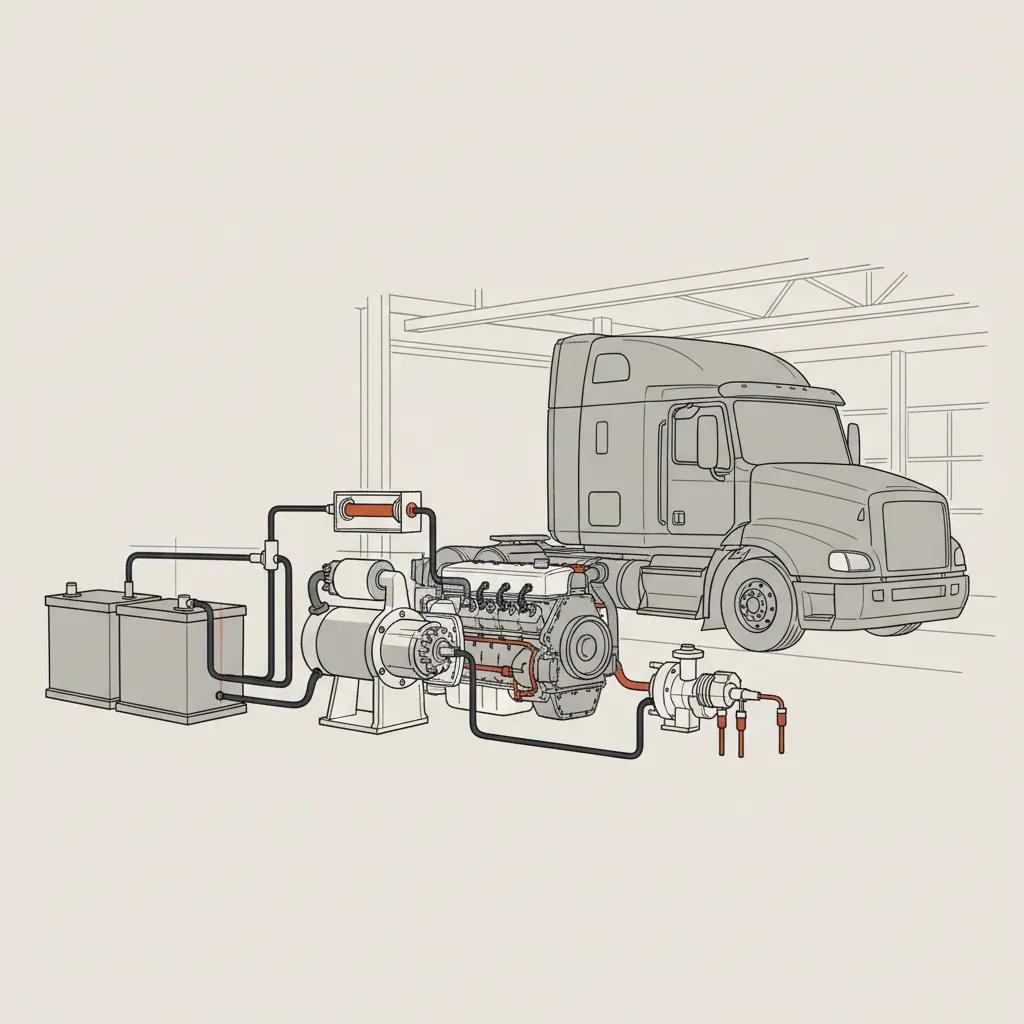
When a diesel won't start, the cause almost always falls into one of three buckets: not enough cranking power (batteries, cables, or starter), not enough fuel reaching the cylinders (low fuel, air in the lines, a clogged filter, or a weak lift pump), or not enough heat to ignite the fuel in cold weather (failed glow plugs or grid heater). Work those three in order before assuming the worst, because most no-start calls trace back to electrical or fuel delivery, not a destroyed engine.
A diesel has no spark plugs. It fires by compressing air until it's hot enough to ignite injected fuel. That means the troubleshooting path is different from a gas engine, and a methodical check beats guessing every time.
First, Define the Symptom Precisely
What the engine is doing tells you which bucket to start in. Before you touch anything, listen and describe the failure:
- No crank, no click: The starter isn't turning the engine at all. Think batteries, cables, ignition switch, or starter circuit.
- Cranks but won't fire: The engine spins normally but never catches. Think fuel delivery, air in the system, or cold-start heat.
- Hard start, then runs: It eventually fires after long cranking, often worse when cold or after sitting. Think glow plugs/grid heater, fuel draining back, or a weak lift pump.
- Starts, stalls, dies: It fires and quits. Think fuel restriction, air leak on the suction side, or a sensor/shutoff issue.
Naming the symptom keeps you from replacing parts at random. A truck that cranks strong but won't fire does not have a battery problem.
No Crank: Start With Power
If the starter won't turn the engine, the issue is electrical before it is mechanical.
Batteries and connections
Heavy trucks use multiple batteries in parallel, and a single weak or corroded connection can drag the whole bank down. Check these in order:
- Corroded or loose battery terminals and ground straps, including the engine-to-frame ground.
- Battery state of charge and the age of the bank, since cold weather sharply reduces available cranking power.
- Voltage drop across cables while someone cranks, which exposes a bad cable that looks fine.
Low voltage at the starter is one of the most common reasons a diesel won't start, and it often masquerades as a starter failure. A slow, labored crank that gets slower usually points to batteries or cables, not the motor itself.
Starter and circuit
A single hard click with no crank can be the starter solenoid, a bad starter, or a power problem upstream. If jumping the truck with a heavy-duty jump start gets it going, the batteries or charging system are the likely root cause and need attention before the next cold morning. For a deeper electrical walk-through, see our guide on electrical wiring repair.
Cranks But Won't Fire: Follow the Fuel
When the engine spins normally but won't catch, you've ruled out cranking power. Now trace the fuel from tank to injector.
Air in the fuel system
Air is the classic no-start gremlin on a diesel. A loose fitting, a cracked line, a bad primer, or a filter change done wrong can let air into the suction side. The pump tries to compress air instead of fuel, and the engine never builds enough to fire. Symptoms include long cranking, starting then stalling, and rough running once it does catch. Re-priming and finding the air leak is the fix.
Fuel filters and water
A clogged primary or secondary fuel filter starves the engine. Water in the fuel, common after sitting or with bad fuel, can also stop a diesel cold and cause injector trouble over time. Check the water separator and drain it, and note when filters were last changed.
Lift pump and fuel supply
A weak or failed lift pump can't move enough fuel to the high-pressure pump, especially under the strain of cold cranking. Confirm there's actually fuel in the tank that the pickup can reach, then verify supply pressure. Persistent fuel delivery problems usually need a shop-level diagnosis through diesel engine repair service.
Fuel quality and gelling in cold weather
In cold conditions, untreated diesel can gel as the wax in the fuel thickens and plugs filters and lines. A truck that started fine in the evening and won't start on a frigid morning may be dealing with gelled fuel rather than a failed part. Proper winter-blend fuel and anti-gel additives prevent it.
Hard Cold Starts: Check the Heat
Diesels rely on heat to ignite fuel. When that heat is missing, you get extended cranking, white smoke, and a rough first few seconds, worst when cold.
- Glow plugs: Many lighter and medium-duty diesels use glow plugs to warm the combustion chamber. One or more failed glow plugs, or a bad relay, makes for hard cold starts.
- Grid (intake) heater: Many heavy-duty diesels use a grid heater in the intake instead of glow plugs. A failed grid heater or its relay produces the same hard-cold-start symptom.
- Air intake heater faults: A heater that quits warming the incoming air leaves the engine fighting cold, dense air it can't ignite cleanly.
If the truck starts easily warm but fights you cold, the cold-start aids are the first place to look.
Fault Codes Point the Way
Modern diesels log diagnostic trouble codes that narrow a no-start fast. Codes for the crankshaft or camshaft position sensor, fuel rail pressure, the lift pump circuit, or the fuel shutoff can explain a crank-no-start in minutes instead of hours. A sensor that fails to report engine position can prevent the ECM from commanding injection at all. Pulling codes before throwing parts at the truck saves money and roadside time.
What to Do Before You Call for Help
A few quick checks can get you rolling or at least give the technician a head start:
- Confirm there's fuel in the tank and the shutoff is in the run position.
- Look for obvious fuel leaks, loose lines, or a recently changed filter that may have introduced air.
- Check the batteries and grounds for corrosion and tightness.
- Note exactly what the engine does: no crank, cranks-no-fire, or hard start, and whether it's cold-related.
- Avoid endless cranking, which overheats the starter and drains the batteries you may need.
If the basics don't reveal it, a no-start on a loaded truck is a downtime problem best handled on-site. Mobile diagnosis brings the scan tool and tools to the truck instead of waiting on a tow.
FAQ
Why does my diesel crank but not start?
A strong crank with no fire points to fuel or cold-start heat, not the batteries. The most common causes are air in the fuel system, a clogged fuel filter, a weak lift pump, water or gelled fuel, or failed glow plugs/grid heater in cold weather. Pulling fault codes helps pinpoint it.
Why won't my diesel start in cold weather but starts fine when warm?
That pattern usually means the cold-start aids are failing or the fuel is gelling. Check glow plugs or the intake grid heater and their relays, and confirm you're running winter-blend fuel with anti-gel additive in freezing temperatures.
Is a no-start usually the starter or the batteries?
More often the batteries, cables, or grounds than the starter itself. A slow, labored crank that gets weaker points to power supply. A single click with no crank can be the solenoid or starter, but low voltage from weak batteries or corroded connections mimics a bad starter, so test power first.
Can air in the fuel system stop a diesel from starting?
Yes. Air on the suction side, often from a loose fitting, cracked line, or an improperly primed filter change, keeps the pump from building pressure. The engine cranks but won't fire, or starts and stalls. The system must be re-primed and the air leak found and sealed.
Should I keep cranking if my diesel won't start?
No. Repeated long cranking overheats the starter and drains the batteries you'll need for a successful start. Crank in short bursts, run through the basic checks, and call for diagnosis if it won't fire.
Get Back on the Road
A diesel that won't start can strand a load anywhere along I-5, I-80, US-50, or CA-99. 916 Truck Repair provides mobile, on-site diagnosis and repair for hard-start and no-start problems across the Sacramento metro and Northern California, including Elk Grove, Stockton, Roseville, Woodland, and Auburn. Call (916) 898-9090 for 24/7 mobile dispatch and get a technician to your truck.
 By Vladimir Sardari · Owner & Lead Technician