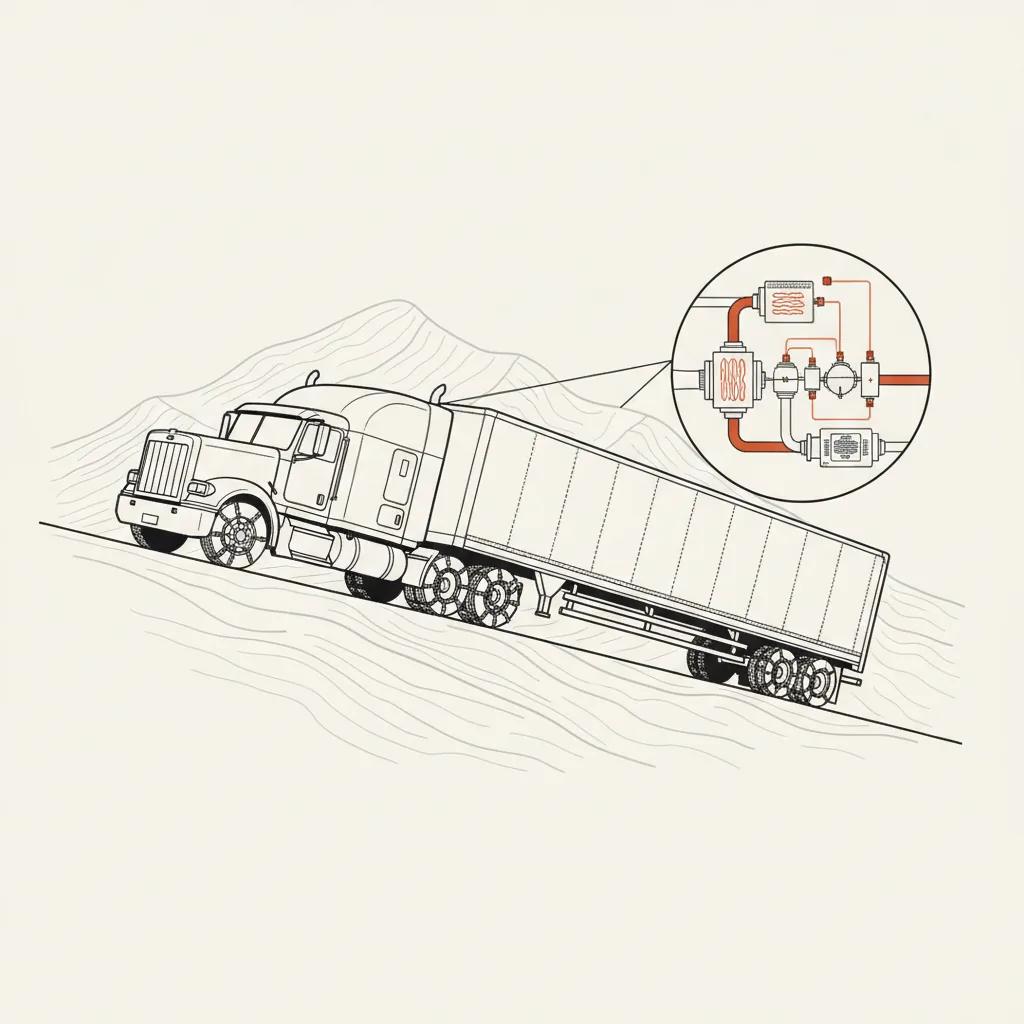
Winter truck prep for the I-80 Sierra corridor comes down to five systems: tire chains that fit and are accessible, an air system protected against freeze-ups, fuel treated against gelling, batteries that can crank in the cold, and brakes ready for long descents off Donner Summit. Handle those before you leave the Sacramento Valley and you turn a high-risk crossing into a routine run. Skip them and you risk chain-control delays, a frozen air system, a no-start at a pullout, or overheated brakes on the way down.
The Sierra stretch of I-80 climbs from near sea level to roughly 7,000 feet at Donner Summit, and weather can swing from dry pavement in Auburn to heavy snow and chain controls within an hour. Preparation matters more here than on almost any route in Northern California.
Why the I-80 Sierra Crossing Is Hard on Trucks
The problem isn't just cold. It's the combination of altitude, sustained grades, rapid temperature swings, and California Department of Transportation (Caltrans) chain controls that can stop traffic with little warning. A truck that runs fine on flat valley highways can expose every weak point in its cold-weather systems on this climb. Three things stack up against you:
- Long, steep grades that heat brakes on the way down and load the cooling and drivetrain on the way up.
- Sub-freezing temperatures that thicken diesel, drain battery capacity, and freeze moisture inside air lines and tanks.
- Chain control zones where you may be required to install chains or be turned around if you can't.
Tire Chains: Carry Them, Fit Them, Reach Them
During winter, Caltrans can impose chain requirements on I-80 over the Sierra at any time. Commercial vehicles are generally required to carry chains in the chain-control area during the season, and at higher control levels you must install them.
Chains are not one-size-fits-all. Confirm they match your tire size and carry enough sets for your configuration; the number of chained tires required depends on the truck and control level. Check current Caltrans requirements for your vehicle class before the season starts, then stage them properly:
- Lay chains out before the trip to check for broken cross-links, bent cams, and missing tighteners.
- Store them where you can reach them in a storm, not buried under freight.
- Carry gloves, a headlamp, a kneeling pad, and bungees so installation in the dark and wet is safer.
- Practice installing one set in your yard so you're not learning on a snowy shoulder.
Chain up only where it's safe and designated, never in the travel lane, and remove chains promptly past the control to avoid damaging them and the road.
Protect the Air System from Freeze-Ups
Cold weather is hard on air brake systems because compressed air carries moisture that freezes inside lines, valves, and tanks. A frozen air system can cause brakes to drag, fail to release, or apply unexpectedly, and it's one of the most common winter breakdowns on mountain routes.
The air dryer is your first line of defense
The air dryer removes moisture before it reaches the tanks. Before winter:
- Have the dryer inspected and the desiccant cartridge replaced if overdue; a saturated cartridge stops protecting the system.
- Confirm the dryer's purge valve and heater (if equipped) work, since a failed heater lets the dryer itself freeze.
- Drain the air tanks regularly; water or oil draining out is a sign the dryer isn't keeping up.
Watch for early freeze symptoms
Slow air buildup, audible leaks that worsen in the cold, or brakes that are slow to release can all point to moisture freezing in the system. If you see these before a Sierra climb, get the system checked rather than gambling on the grade. For diagnosis and repair across the Sacramento area, air brake repair covers dryers, valves, and lines that act up in the cold. Some drivers carry alcohol-based air-line antifreeze for emergencies, but a properly serviced dryer is the real fix.
Treat Fuel Against Gelling
Diesel fuel contains paraffin wax that begins to cloud and gel as temperatures drop. When it gels, it clogs fuel filters and can stall the engine, often on the climb where you can least afford it. The Sierra's altitude and overnight lows make this a real risk from late fall through early spring. To reduce it:
- Buy winterized diesel in the region. Mountain and cold-climate fuel is blended for lower temperatures, but fuel from a warmer valley may not be.
- Use an anti-gel additive rated for the temperatures you expect, added at fill-up so it mixes properly.
- Replace fuel filters before winter so a partially restricted filter doesn't gel shut faster.
- Keep the tank fuller to limit condensation, which adds water that can freeze in lines and filters.
- Drain the fuel-water separator; trapped water freezes and blocks flow.
If the engine starts losing power and the filter is icing, get off at a designated stop rather than pushing up the grade.
Batteries and Starting in the Cold
Cold weather sharply reduces a battery's available cranking power while the engine demands more to turn over thick, cold oil. A battery that started fine in Sacramento may struggle at a frigid Sierra pullout, and one weak unit can drag down the whole bank. Before winter:
- Have the batteries load-tested, not just voltage-checked, so a weak cell shows up under real demand.
- Clean and tighten terminals and grounds; corrosion costs you cranking power.
- Inspect the alternator and charging output so the bank recharges on the road.
- Confirm block heaters or other cold-start aids work if your truck has them.
If you do get stranded with a no-start, a mobile roadside truck repair call can bring a heavy-duty jump start or diagnose a charging fault without forcing a tow off the mountain.
Brakes on the Grades
The descents off Donner Summit test winter prep hardest. Long downgrades heat the brakes, and overheated brakes lose effectiveness right when you need them on snow or ice. Manage the grade rather than fighting it:
- Pick the right gear before you start down so the engine and engine brake hold speed and you're not leaning on the service brakes.
- Use the engine brake or retarder to control speed, saving the service brakes for slowing further when needed.
- Use snub braking when you do brake: apply firmly to slow several mph, then release to let the brakes cool, instead of dragging them continuously.
- Know the runaway ramps and use them if your speed climbs and you can't recover it.
Before the season, confirm brake adjustment is within limits (out-of-adjustment brakes overheat the rest), check linings and drums for wear, verify the air system holds pressure, and confirm the trailer brakes and ABS function so braking stays balanced. If anything feels off, address it in the valley, not on a snowy summit.
A Quick Pre-Sierra Winter Checklist
Before you leave Sacramento, Roseville, or Auburn for the climb:
- Chains that fit, inspected and reachable, plus gloves and a light.
- Air dryer serviced, tanks drained, no freeze symptoms.
- Winterized fuel with anti-gel additive and fresh filters.
- Batteries load-tested, terminals clean, charging confirmed.
- Brakes adjusted and inspected, engine brake working, trailer brakes and ABS good.
- Coolant at the correct freeze-protection mix.
Ten minutes of checks in the valley beats hours stuck in chain control with a frozen air system.
FAQ
When are tire chains required on I-80 over the Sierra?
Caltrans imposes chain controls on I-80 when winter conditions require them, which can happen at any time during the season. Commercial vehicles are generally required to carry chains in the designated chain-control area, and at higher control levels you must install them. Check current Caltrans requirements for your vehicle class before each trip.
Why do air brakes freeze in cold weather?
Compressed air carries moisture, and the air dryer removes it before it reaches the tanks. If the dryer's desiccant is saturated or its heater fails, moisture freezes in lines and valves, which can make brakes drag, fail to release, or apply on their own. Servicing the dryer and draining tanks is the fix.
How do I keep diesel from gelling on the climb?
Use winterized diesel blended for cold temperatures, add an anti-gel additive at fill-up, replace fuel filters before winter, drain the fuel-water separator, and keep the tank fuller to reduce condensation. Gelled fuel clogs filters and can stall the engine on the grade.
How do I keep my brakes from overheating coming down Donner Summit?
Select a low enough gear before starting the descent, use the engine brake or retarder to hold speed, and use snub braking, firm applications followed by a release to let brakes cool, rather than dragging them continuously. Know where the runaway ramps are.
What should I do if I break down in the Sierra in winter?
Get to a safe, designated stop, turn on your hazards, and call for help rather than pushing a failing truck up or down the grade. A mobile repair service can often bring a jump start, air-system fix, or fuel diagnosis to you instead of forcing a costly tow off the mountain.
Planning an I-80 Sierra run and want your truck checked first, or stuck with a cold-weather breakdown on the corridor? 916 Truck Repair offers 24/7 mobile dispatch across Sacramento and Northern California. Call (916) 898-9090.
 By Vladimir Sardari · Owner & Lead Technician