Home/Blog/I-80 and I-5 Freight Corridor: Common Breakdown Spots Near Sacramento
Blog Post
I-80 and I-5 Freight Corridor: Common Breakdown Spots Near Sacramento
Trucks don't break down randomly near Sacramento. They fail in predictable spots: the Auburn grade on I-80, the hot valley stretch of I-5, and the stop-and-go interchange. Here's where, why, and how to prepare.
By Vladimir Sardari · Owner & Lead Technician
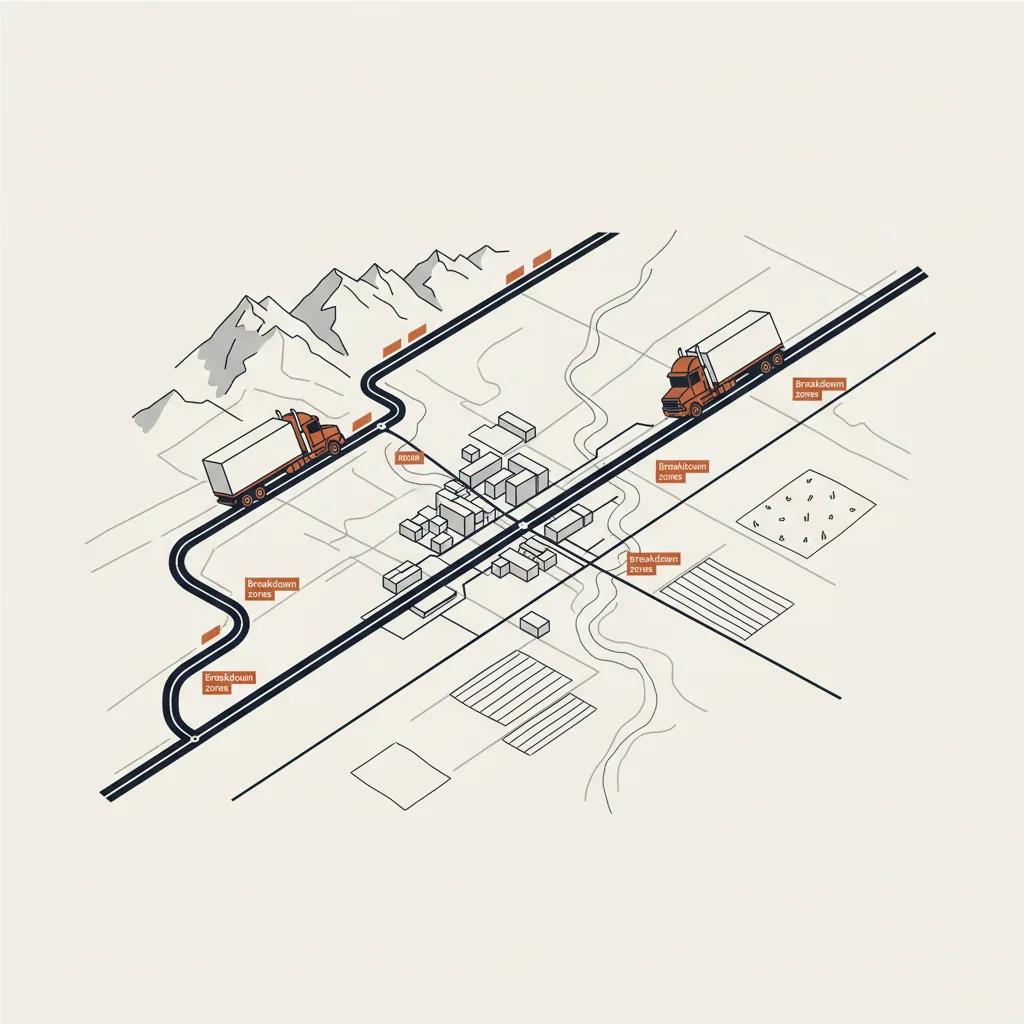
Trucks tend to break down near Sacramento in four predictable places: the long climb up the Auburn grade on I-80 eastbound, the flat baking stretch of I-5 through the valley, the congested I-80 and I-5 interchange around West Sacramento, and the approaches to weigh stations where DOT inspections pull rigs out of service. Each spot stresses a different part of the truck. The grade cooks brakes and cooling systems. The valley heat blows tires and overheats engines. The interchange grinds clutches and brakes. Knowing the pattern is half the battle.
This is a driver's guide built from years of getting calls on these exact roads. We'll walk corridor by corridor, name the failure that shows up most, and give you a concrete prep step for each. No filler.
Key Takeaways
- The I-80 Auburn/Sierra grade eastbound is the hardest single stretch: long climbs overheat cooling systems and long descents fade brakes.
- I-5 valley heat is the silent killer in summer: hot pavement and high ambient temps drive tire blowouts and coolant failures.
- The West Sacramento I-80/I-5 interchange wears clutches and brakes through constant stop-and-go.
- Check chain-control status onCaltransQuickMap before every Sierra run in winter.
Why Do Breakdowns Cluster on These Corridors?
Breakdowns cluster where the road demands more from the truck than a flat highway does. Caltrans classifies the Sierra Nevada stretch of I-80 as a sustained mountain grade with seasonal chain controls, and that single feature explains most cold-season and overheating failures in the region. Heat, elevation, and congestion each attack a different system.
Think of it this way. A truck running a flat, steady 60 mph barely notices a marginal water pump or a tired brake. Put that same truck on a six-percent grade in July, or stuck crawling through an interchange at rush hour, and the weak part finally gives. The corridor doesn't cause the failure. It exposes one that was already there. In our experience, the calls aren't random across the map. They concentrate at the points where the road changes character: the bottom of a long climb, the first miles of a long descent, and the merge points where traffic stacks up. If you know those transition points, you know where to pay attention.
I-80 Eastbound: The Auburn and Sierra Grade
The I-80 climb from Sacramento up through Auburn and into the Sierra is the toughest single stretch for heavy trucks in the region. Caltrans lists this corridor under active chain-control orders during winter storms, and the sustained grade puts continuous load on cooling and braking systems for miles at a time. Most of our grade-related calls start here.
Cooling System Stress on the Climb
Long climbs overheat engines. As the grade rises from the valley floor toward Auburn and beyond, a diesel works at high load for an extended period, and any weakness in the cooling system shows up fast. Marginal coolant, a tired water pump, a clogged radiator, or a slipping fan clutch can all hold up fine on flat ground and then spike the temperature gauge on the climb.
Prep before the climb:
Top off and pressure-check coolant; replace anything cloudy or low.
Inspect the radiator and charge-air cooler for bug pack and debris.
Confirm the fan clutch engages and belts aren't glazed.
Watch the gauge from the bottom of the grade, not the top.
Brake Fade on the Descent
Long descents fade brakes, and the Sierra side of I-80 has plenty of downgrade. Riding the service brakes the whole way down heats the drums until braking power drops off. TheFMCSAemphasizes proper use of engine and exhaust braking on mountain descents, and that guidance matters here. Use a low gear, lean on the engine brake, and let the service brakes cool. We've found that most brake-fade calls trace back to a driver who held one steady gear too high and feathered the pedal the whole way down. Pick the gear at the top, not halfway through.
I-5 Through the Valley: Heat, Tires, and Overheating
The flat I-5 run through the Central Valley looks easy and isn't, especially in summer. Caltrans and the National Weather Service routinely record extreme summer heat across the valley, and that ambient load combined with hot pavement is what drives the tire and cooling failures we see on this corridor. Flat road, high stakes.
Heat is the theme here. Tires run hotter on baking asphalt, and an under-inflated or aging tire that would survive a cool morning can let go at highway speed in the afternoon. Coolant that's marginal will boil over sitting in stop-and-go near Stockton or in a slow merge. The damage is heat, not grade.
Tire Blowouts in Summer Heat
Under-inflated tires blow out in heat. Pressure drops, friction climbs, the casing overheats, and the tire fails, often on a trailer position the driver can't feel. Check cold pressures before the valley run and look for uneven wear or sidewall cracking.
Zone
Common Failure
Prep Tip
I-80 Auburn/Sierra grade
Overheating on climb, brake fade on descent
Pressure-check coolant; pick a low gear before the descent
I-5 valley (summer)
Tire blowout, coolant boil-over
Set cold tire pressures; flush old coolant
West Sac I-80/I-5 interchange
Clutch and brake wear
Inspect clutch and brake adjustment before peak hours
Weigh-station approaches
Out-of-service from DOT inspection
Pre-trip brakes, lights, tires, and logs
Vacaville / Davis / Elk Grove
Heat plus stop-and-go combined
Combine valley and interchange checks
The West Sacramento I-80 and I-5 Interchange
The interchange where I-80 and I-5 meet near West Sacramento is a stop-and-go grinder. Heavy commuter and freight traffic stacks up here at peak hours, and the constant clutch and brake work is what wears rigs down in this zone. It's not dramatic. It's slow, repetitive damage.
Stop-and-go traffic wears clutches and brakes. Every crawl forward and every stop adds a cycle, and over thousands of cycles a clutch that was already thin starts slipping and a brake that was out of adjustment starts dragging. Drivers who run this interchange daily see the wear long before drivers who only pass through. The interchange rarely causes a roadside breakdown on its own. What it does is accelerate wear that finishes somewhere else, often on the Auburn grade a day later. Treat interchange miles as harder than they feel.
Weigh Stations and DOT Inspections
Weigh-station approaches on both corridors are where trucks get pulled out of service, which functions like a breakdown for the schedule. TheCVSAand FMCSA report that brake-system and tire defects are among the most common out-of-service violations nationwide, and those are exactly the systems the valley heat and Sierra grade already stress. A clean truck rolls through. A marginal one doesn't.
What Triggers an Out-of-Service Order
Out-of-service orders usually trace to brakes, tires, lights, and load securement. TheU.S. DOTand FMCSA publish the inspection criteria, and the CVSA runs the standardized roadside inspection program. Brake adjustment, tread depth, working lamps, and current logs are the items inspectors hit first.
Pre-station checklist:
Brakes adjusted and stroke within limits.
Tires above tread minimums, no exposed cord.
All required lamps working.
Logs and paperwork current.
How Do You Prepare for All of These at Once?
You prepare by matching the check to the corridor, since each zone fails differently. The shared thread across every Sacramento breakdown spot is that heat, grade, and congestion expose existing weakness rather than create new problems. A focused pre-trip catches most of it before you leave the yard.
Before a Sierra run, prioritize cooling and brakes. Before a summer valley run, prioritize tires and coolant. Before a daily interchange grind, prioritize clutch and brake adjustment. And before any weigh station, run the inspection checklist. Same truck, different emphasis depending on where it's headed.
FAQ
Where is the worst breakdown spot on I-80 near Sacramento?
The eastbound climb from Auburn into the Sierra is the hardest stretch. Long sustained grades overheat cooling systems on the way up and fade brakes on the way down. Caltrans posts chain controls here in winter, which adds traction failures to the list. Prep cooling and brakes before you start the climb.
Why do trucks overheat on flat I-5?
I-5 looks flat and easy, but Central Valley summer heat does the damage. High ambient temperatures and hot pavement push coolant and tires past their limit, especially in slow traffic where airflow drops. A marginal cooling system that survives the highway will boil over in a slow merge. Flush old coolant before summer valley runs.
What gets a truck pulled out of service at a Sacramento weigh station?
Brakes, tires, lights, and load securement lead the list. The CVSA and FMCSA standardize roadside inspections, and brake and tire defects are among the most common out-of-service violations. The valley heat and Sierra grade already stress those exact systems, so a quick pre-station check pays off.
How do I avoid clutch and brake wear at the West Sac interchange?
You can't avoid the traffic, but you can manage the wear. Keep the clutch properly adjusted, use the brakes smoothly instead of riding them, and run the interchange outside peak hours when possible. Drivers who commute this stretch daily should inspect clutch and brake adjustment more often than the mileage alone suggests.
Should I check chain controls before a Sierra run?
Yes, every winter run. Caltrans QuickMap shows live chain-control status for I-80 over the Sierra, and conditions change fast during storms. Carry chains that fit your tires, know how to install them, and check the status before you leave the valley rather than discovering a closure at the chain-up area.
Before You Roll Out
The pattern holds across all four zones: the road exposes weakness, it doesn't invent it. The Auburn grade finds your cooling and brakes. The valley heat finds your tires and coolant. The interchange grinds your clutch. The weigh station finds whatever the others missed. Match your pre-trip to where the truck is headed and you'll catch most failures in the yard instead of the shoulder.
When something does let go on I-80, I-5, or the interchanges around Sacramento, 916 Truck Repair runs a 24/7 mobile diesel and heavy-duty team built for these exact corridors. We come to the breakdown, on the grade or in the valley, and get you rolling again. Keep the number handy before you need it.
Vladimir Sardari is the owner of Vmore LLC (916 Truck Repair) and has worked in the trucking industry for over 15 years as a diesel mechanic and shop manager. Based in the Sacramento area, he leads the mobile repair team serving local fleets, owner-operators, and drivers across Northern California.
Truck Down? Call 24/7 Dispatch
Mobile truck repair for highway breakdowns, truck stops, fleet yards, docks, and roadside service calls.
 By Vladimir Sardari · Owner & Lead Technician