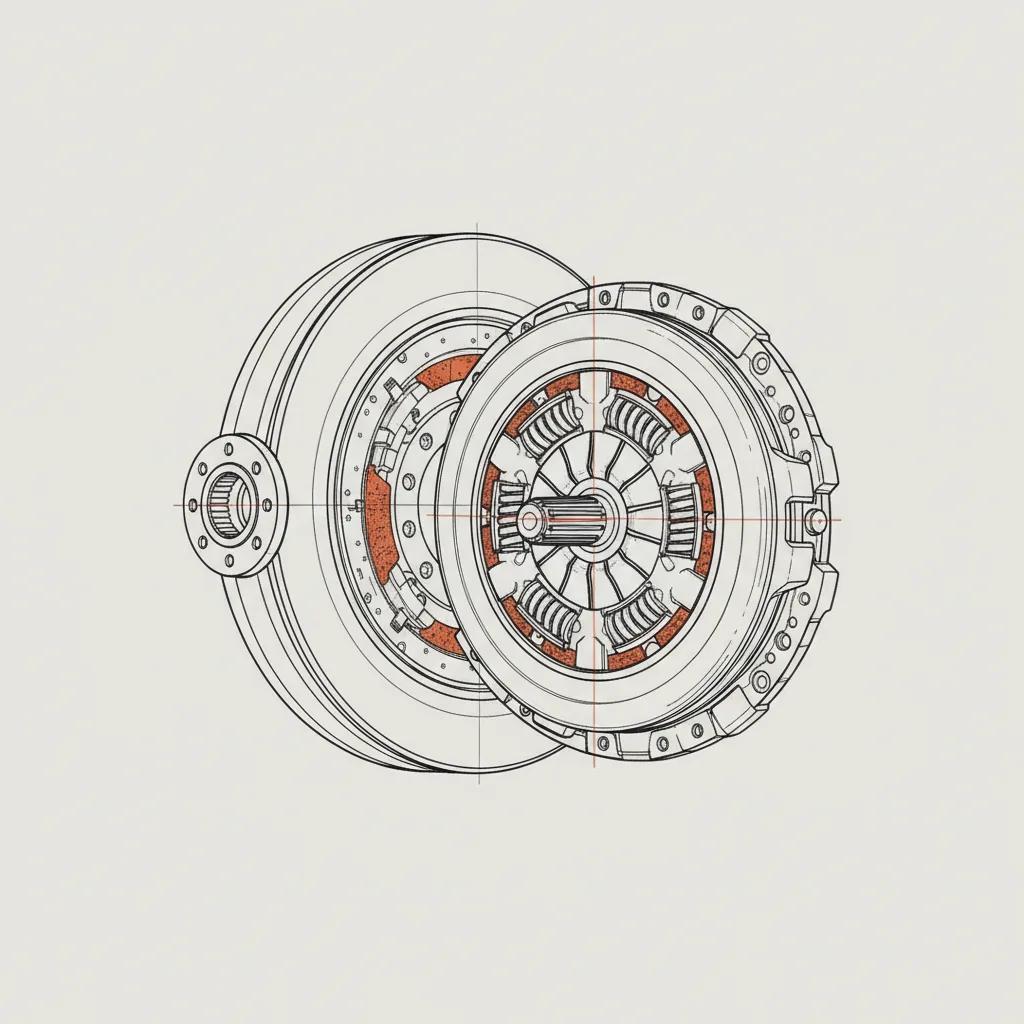
The clearest truck clutch failure symptoms are slipping under load (engine rpm climbs but road speed doesn't), a pedal that's gone hard, spongy, or won't return, chatter when you engage, grinding when you shift, and a burning smell after a pull. A heavy-duty clutch usually warns you before it strands you, so reading these signs early lets you plan a repair instead of getting towed off a grade with a loaded trailer.
The clutch connects your diesel's flywheel to the transmission input shaft. Press the pedal to disconnect engine power and shift; release it and the disc clamps against the flywheel to transmit torque. In a Class 8 truck that disc, pressure plate, release bearing, and the linkage behind them live a brutal life of heavy loads, long grades, and stop-and-go yard work. When they wear or fail, the symptoms come on gradually, then all at once. Catching the early clutch symptoms is the difference between a scheduled fix and a no-start in the breakdown lane.
The Most Common Truck Clutch Failure Symptoms
Clutch problems rarely announce themselves with a single dramatic failure. They build over time, and several of these signs overlap with transmission and linkage issues, so it helps to read them together rather than chasing one in isolation.
Clutch slipping under load
Slipping is the classic worn-clutch symptom and the easiest to confirm. When the disc can no longer hold against the flywheel, engine rpm rises but the truck doesn't accelerate to match — most obvious in a high gear, on a hill, or under load. A quick test: in a high gear at low speed, ease into the throttle. If the tach jumps while road speed lags, the clutch is slipping. Slipping generates heat that glazes the disc and accelerates the failure, so address it quickly rather than riding it out.
A pedal that feels wrong
How the pedal feels tells you a lot about what's failing:
- Hard or stiff pedal: Often a linkage, hydraulic, or pressure-plate problem, or a failing air booster.
- Spongy or low pedal: Usually air in a hydraulic clutch line, a leaking master or slave cylinder, or low fluid.
- Pedal that stays down or won't return: A broken return spring, seized linkage, or hydraulic failure — and a truck that's now very hard to shift.
- Engagement point high or low: Grabbing near the top of pedal travel often signals a worn disc; grabbing at the floor can mean adjustment is needed.
Chatter, shudder, or vibration on engagement
If the truck shakes or the driveline shudders as you let the clutch out from a stop, that's chatter. Common causes are oil or grease contamination on the disc (often from a leaking rear main or input-shaft seal), worn or broken damper springs, a warped flywheel, or worn mounts. Chatter that starts suddenly usually points to contamination or a broken component rather than gradual wear.
Grinding, hard shifting, or stuck gears
If the clutch isn't fully disengaging — what techs call "not releasing" or dragging — the input shaft keeps spinning with the pedal down, so the gears won't line up. You'll grind going into gear, struggle into first or reverse from a stop, or find the truck wants to creep with the pedal fully depressed. On a heavy-duty truck this is frequently a clutch brake or adjustment issue, not the disc itself — which is why diagnosis matters before anyone pulls a transmission.
A burning smell
A sharp, acrid burning odor after climbing a grade or riding the clutch in traffic means the disc facing is overheating and glazing. An occasional whiff during an extreme pull can be normal; a strong, repeated smell during ordinary driving means the clutch is slipping and cooking itself.
Noises that change with the pedal
Listen to when a noise appears:
- A chirp or rumble when you press the pedal often points to a worn or dry release (throw-out) bearing.
- A rattle at idle in neutral that quiets when you press the pedal can indicate the pilot or input bearing.
- A clunk on engagement may mean worn splines, mounts, or driveline parts rather than the clutch.
What Causes Heavy-Duty Clutches to Fail
Knowing the root cause helps you avoid a repeat failure, because the symptom you feel is usually downstream of something else.
Normal wear and high mileage
The friction disc is a wear item, like brake linings. A clutch near the end of its life slips, grabs high, and engages abruptly. There's no universal mileage — duty cycle, load, terrain, and driver habits matter far more than the odometer.
Driving habits and duty cycle
How a truck is driven is often the deciding factor. Riding the clutch, slipping it to launch a heavy load, holding on a hill with the clutch instead of the brake, and aggressive starts all add heat and wear. Stop-and-go local work and steep terrain like the climbs east of Sacramento on I-80 and US-50 are harder on a clutch than steady highway miles.
Contamination and leaks
Oil on the friction surface ruins a clutch's grip and causes both slipping and chatter. The usual sources are a leaking engine rear main seal or transmission input-shaft seal. When contamination is the cause, the leak has to be fixed at the same time or the new clutch fails the same way.
Adjustment, hydraulics, and linkage
Many "clutch" complaints aren't the disc at all. Free play out of spec, a worn clutch brake, air in the hydraulic line, a leaking master or slave cylinder, a tired air booster, or worn linkage can all mimic a failing clutch. This is why diagnosis comes first — replacing a disc that wasn't the problem leaves the real fault in place.
When to Stop Driving
Some symptoms mean keep an eye on it; others mean park it before you do real damage. Stop and call for help if:
- The clutch slips badly under load or you smell it burning during normal driving — continued slipping can destroy the disc, pressure plate, and flywheel.
- The pedal goes to the floor and stays, or you suddenly can't get into or out of gear.
- Grinding is so severe you can't shift safely, or there's a loud new bearing noise from the bellhousing.
Pushing through a failing clutch often turns a disc-and-pressure-plate job into one that needs a flywheel too, and risks a breakdown. Because the clutch lives between the engine and the gearbox, a clutch that won't release can leave the truck unable to move at all — a problem closely tied to heavy-duty transmission repair and worth diagnosing before it strands you. If you're already on the shoulder, roadside truck repair can assess it on-site.
What Affects the Cost of a Clutch Repair
We don't quote a flat price, because several factors move the number on a heavy-duty clutch job:
- Whether the fix is an adjustment, a hydraulic or linkage repair, or a full clutch replacement
- Whether the flywheel needs resurfacing or replacement, which only shows once the clutch is out
- Whether a seal leak has to be repaired so the new clutch isn't contaminated
- The truck's configuration, clutch size and type, and whether the job is on-site or requires pulling the transmission
Because most of the labor is in accessing the clutch, it's worth inspecting the flywheel, release bearing, and seals while everything is apart.
FAQ
What are the first signs a truck clutch is failing?
The earliest signs are usually slipping under load (engine rpm rises faster than road speed), a change in where the clutch engages on the pedal, and a faint burning smell after a hard pull. Chatter and harder shifting tend to follow as wear progresses.
Can I keep driving with a slipping clutch?
It's risky. Slipping creates heat that glazes the disc and can damage the pressure plate and flywheel, turning a smaller repair into a larger one. Light, occasional slip means schedule service soon; heavy slipping or a burning smell means stop and get it checked.
Why won't my truck go into gear with the clutch pressed?
That usually means the clutch isn't fully releasing, so the input shaft keeps spinning and the gears can't engage. Common causes on heavy-duty trucks include a worn clutch brake, an out-of-spec adjustment, low fluid or air in a hydraulic clutch, or a failed master or slave cylinder — not always the disc itself.
What does a burning clutch smell like?
A failing clutch gives off a sharp, acrid odor, often described as burning paper or hot brakes, sometimes with light smoke, from the disc facing overheating as it slips. An occasional whiff during an extreme load can be normal, but a strong, repeated smell signals a slipping clutch.
Is clutch chatter a serious problem?
It can be. Chatter often comes from oil contamination on the disc, broken damper springs, a warped flywheel, or worn mounts. Contamination means a leak is feeding the clutch oil, so the underlying leak has to be fixed too — otherwise a replacement clutch will chatter again.
Get Your Clutch Diagnosed Before It Strands You
If your clutch is slipping, chattering, smelling hot, or refusing to release, call 916 Truck Repair at (916) 898-9090 for 24/7 mobile dispatch. We come to you — yard, rest area, or roadside — across the Sacramento metro and the I-5, I-80, CA-99, and US-50 corridors to find the real cause and get you rolling.
 By Vladimir Sardari · Owner & Lead Technician