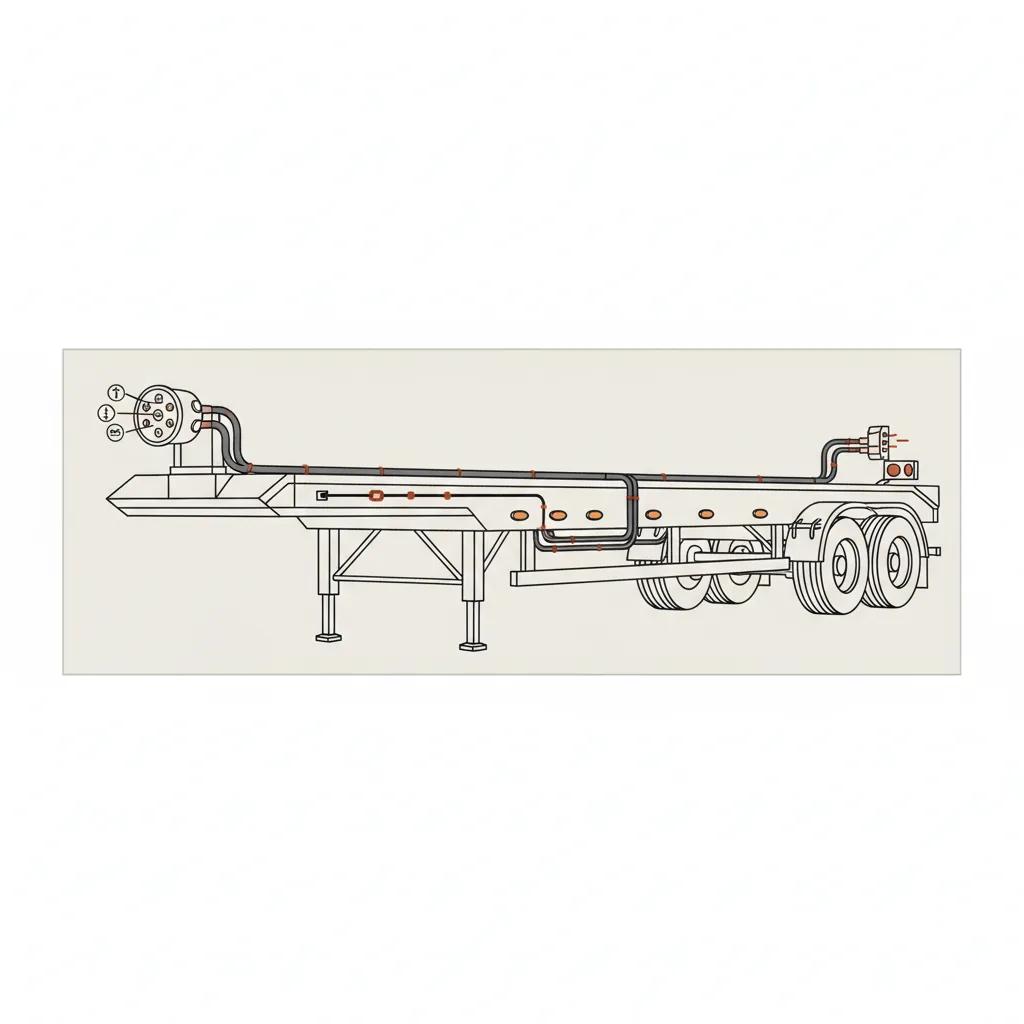
Most trailer light problems come down to four things: corrosion in the connectors, a bad ground, a damaged wire, or a failing 7-way plug. Lights are a low-voltage system constantly exposed to road salt, water, and vibration, so the failure point is almost always a connection rather than the bulb itself. Start your diagnosis at the 7-way plug and the ground, and you'll solve the large majority of trailer lighting faults before you ever pull a lens off.
For commercial drivers, trailer lighting is not just a convenience. Inoperative required lamps are a roadside inspection item, and a single dead marker or brake light can put your unit out of service or earn a CSA violation. Knowing how to read the symptoms quickly keeps you legal and moving.
Why trailer light problems happen in the first place
A trailer's electrical system lives in one of the harshest environments on the vehicle. Every bump flexes the wiring, every rainstorm drives moisture into the connectors, and de-icing chemicals on highways like I-80 and I-5 accelerate corrosion. Unlike the tractor, the trailer also gets coupled and uncoupled constantly, which wears the pins in the 7-way connector and exposes the harness to physical damage.
Because the system runs on 12 volts, even a small amount of resistance from corrosion or a loose connection causes a noticeable voltage drop. That's why a trailer light problem often shows up as dim lamps, flickering, or lights that work intermittently rather than a clean on/off failure.
The most common root causes
- Corroded or damaged 7-way connector pins on either the tractor or trailer side
- Poor or missing ground — the single most common cause of strange, multi-light symptoms
- Chafed or broken wires where the harness rubs the frame, crosses the slider, or hangs near the landing gear
- Water intrusion into lamp housings, which corrodes sockets and bulb bases
- Blown fuses or a tripped breaker on the tractor's trailer-circuit feed
- Failed LED modules, which usually fail as a unit rather than dimming gradually
How to diagnose trailer light problems step by step
Work from the power source outward. A methodical check beats randomly swapping bulbs every time.
Start at the 7-way plug
Unplug the connector and inspect both halves. Look for green or white corrosion, bent or pushed-back pins, and melted plastic. Clean the pins with a small wire brush or electrical contact cleaner and apply dielectric grease to seal out moisture. A surprising number of "dead trailer" calls are solved right here.
Check the ground
The white wire is the ground, and a bad ground produces some of the most confusing symptoms in trailer wiring. Classic signs include lights that get brighter when you press the brake, turn signals that make the running lights pulse, or several lamps dimming together. Trace the ground to where it bolts to the trailer frame, remove the bolt, sand the metal to bare shiny steel, and reattach with a star washer for a solid bite.
Test for voltage with a circuit tester
A simple test light or multimeter tells you whether power is reaching each lamp. Probe at the connector first, then at the suspect light socket. If power is present at the socket but the lamp is dead, the problem is the bulb, the socket, or that lamp's ground. If power isn't reaching the socket, the break is upstream in the harness.
Inspect the harness for chafing
Follow the wiring along the frame rails and look for spots where insulation has worn through, especially near sharp edges, the suspension slider, and any point that flexes. Damaged sections should be properly spliced with heat-shrink connectors and re-secured so they can't rub again.
Fixing the common failures
Corrosion and connection repairs
Clean connections are the foundation. Use marine-grade or heat-shrink butt connectors rather than crimp-and-tape repairs, which let moisture back in within months. Seal every connector with dielectric grease. On the 7-way, badly worn plugs are cheaper to replace than to keep chasing.
Ground repairs
Add a clean, dedicated ground if the factory ground point is rusted beyond saving. Many persistent trailer light problems disappear the moment a proper ground is restored to bare metal.
Bulb, socket, and LED replacement
Incandescent bulbs do burn out, so replace them with the correct part number. Corroded sockets should be replaced, not just cleaned, if the contacts are pitted. LED lamps don't dim like incandescent bulbs — when an LED module quits, you replace the sealed unit.
When to bring in a technician
If you've cleaned the plug, fixed the ground, and still have intermittent faults, the break is likely buried inside the harness or in a damaged section that needs to be traced and rebuilt. That's repetitive, time-consuming work that's faster with the right diagnostic tools. A mobile technician can come to your yard or roadside, run the circuit down, and get the trailer legal again. Learn more about trailer repair or dedicated electrical and wiring repair if the problem keeps coming back.
Preventing future trailer wiring problems
- Apply dielectric grease to the 7-way plug and lamp sockets at every PM interval
- Inspect the harness for chafe points and re-secure loose runs before they wear through
- Replace cracked lamp lenses promptly to keep water out of the housing
- Carry spare bulbs, fuses, and a test light so a single dead lamp doesn't strand you
- Check all lights as part of your pre-trip walkaround — it's required, and it catches problems early
Regular attention to connections is far cheaper than a roadside violation or a missed delivery. TheFMCSArequires that all lamps and reflective devices be operable and properly mounted, and inspectors do check them, so a few minutes of prevention protects both your wallet and your safety record.
FAQ
Why do my trailer lights work intermittently?
Intermittent trailer lights are almost always a connection problem — usually a corroded 7-way plug or a loose ground that makes and breaks contact as the trailer flexes over bumps. Clean and seal the plug and verify the ground first.
My brake lights work but the turn signals don't. What's wrong?
When one function works and another doesn't, the bulb and main power are likely fine. The issue is usually in that specific circuit: a broken wire, a corroded socket, or a fault in the turn-signal feed from the connector. Test for voltage at the affected socket to narrow it down.
Can a bad ground cause multiple trailer lights to act up?
Yes. A poor ground is the leading cause of weird, multi-lamp symptoms — lights dimming together, signals causing the running lights to flicker, or brake lights brightening other lamps. The current backfeeds through whatever path it can find. Restoring a clean ground to bare frame metal usually fixes all of it at once.
Are inoperative trailer lights a DOT violation?
Yes. Under FMCSA regulations, required lamps must be operable. Inoperative brake lights, turn signals, or required marker lamps can result in a citation and, depending on which lamp, can place the vehicle out of service during a roadside inspection.
Should I replace a whole LED lamp or just the bulb?
Most commercial trailer LED lamps are sealed, non-serviceable modules. If the LED lamp fails, you replace the entire unit rather than an individual bulb. Incandescent fixtures, by contrast, take a replaceable bulb.
If trailer light problems are keeping you off the road, 916 Truck Repair offers 24/7 mobile dispatch across Sacramento and Northern California. Call (916) 898-9090 and a technician can come to your location to diagnose and repair the wiring on site.
 By Vladimir Sardari · Owner & Lead Technician