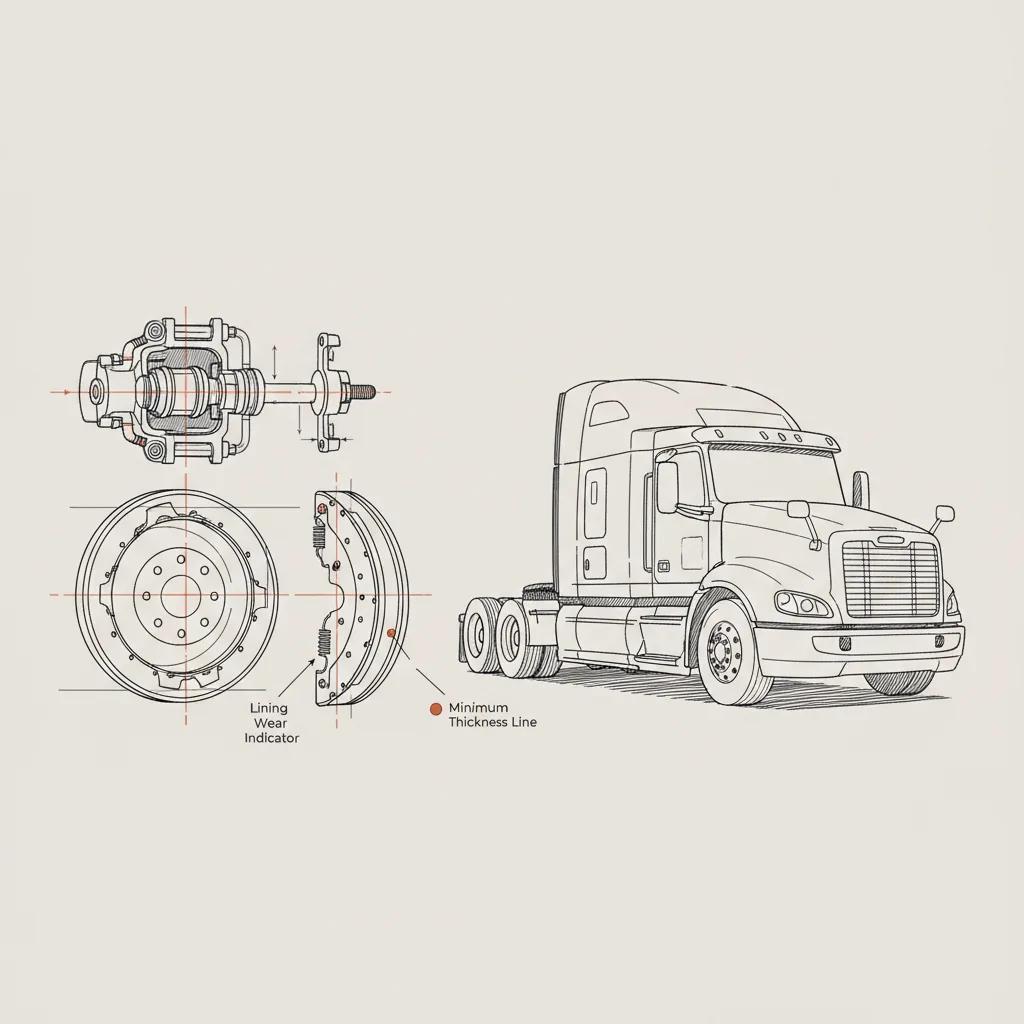
You avoid CSA brake violations by keeping the air brake system withinFMCSAout-of-service tolerances at all times: proper pushrod stroke, no audible air leaks, adequate lining thickness, and connected, undamaged components. The most effective approach is a disciplined pre-trip brake check, regular preventive maintenance on adjustment and lining wear, and fixing any defect before it becomes an inspection finding rather than after. Brakes are consistently one of the most-cited categories in commercial vehicle inspections, so consistent attention here has an outsized effect on your safety record.
What CSA Brake Violations Are and Why They Matter
CSA is the Federal Motor Carrier Safety Administration's (FMCSA) Compliance, Safety, Accountability program. It uses roadside inspection and crash data to assign Safety Measurement System (SMS) scores across categories called BASICs. Brake-related defects fall under the Vehicle Maintenance BASIC, and they carry severity weights that affect a carrier's score.
A violation is recorded when an inspector finds a brake condition that doesn't meet the FMCSA regulations or the Commercial Vehicle Safety Alliance (CVSA) out-of-service criteria. Some findings are simply noted; more serious ones place the vehicle out of service (OOS), meaning it cannot move until repaired. Both hurt your CSA profile, but an OOS order also means immediate downtime and, often, a roadside repair call.
For owner-operators and fleet managers, the practical stakes are clear:
- A poor Vehicle Maintenance BASIC score raises your odds of being selected for future inspections.
- Out-of-service findings strand the truck and the load.
- Repeated brake violations can factor into insurance and broker decisions.
The Brake Defects Inspectors Find Most Often
Knowing what gets cited helps you target your checks. The recurring brake problems in roadside inspections include:
- Brakes out of adjustment. Pushrod stroke beyond the allowable limit for the chamber size is one of the most common single defects. Slack adjusters that have drifted out of spec are the usual cause.
- Air leaks. A leak rate the system can't keep up with, or leaks at fittings, lines, and chambers, can trigger violations and, if severe, an out-of-service order.
- Worn linings or pads. Lining or pad worn below the regulatory minimum thickness, or contaminated with grease or oil.
- Cracked, broken, or missing components. Cracked drums or rotors, broken springs in the chamber, missing or loose parts.
- Inoperative or mismatched components. A non-functioning brake on one wheel, or air lines and chambers that don't match.
- ABS faults. A malfunction indicator lamp that stays on, or an inoperative ABS on a tractor or trailer.
The CVSA out-of-service criteria define the threshold where a defect becomes severe enough to ground the vehicle, including the "20 percent defective brakes" rule, where a vehicle is placed out of service if the number of defective brakes equals 20 percent or more of the service brakes on the vehicle or combination.
How to Avoid CSA Brake Violations
Preventing csa brake violations comes down to catching problems before an inspector does. Build the habits below into daily operation and your maintenance schedule.
1. Do a real pre-trip brake check
The pre-trip is your first and cheapest line of defense. A thorough air brake check covers:
- Governor cut-in and cut-out at the correct pressures.
- Low-air warning activating before pressure drops too far.
- Air loss rate test with the engine off and brakes applied, confirming the system holds pressure within limits.
- Spring brake (parking) application at the proper pressure.
- Visual inspection of chambers, slack adjusters, pushrods, hoses, and gladhand connections for damage, leaks, or loose mounting.
2. Keep brakes in adjustment
Out-of-adjustment brakes are largely preventable. Even with automatic slack adjusters, components wear and can stop self-adjusting correctly. Measure pushrod stroke against the chamber's allowable limit during PMs, and never assume an automatic slack adjuster is doing its job. If a stroke is long, find out why instead of just manually adjusting it, because a manual adjustment on an automatic slack adjuster usually masks a deeper fault.
3. Stay ahead of lining and drum wear
Track lining and pad thickness on a schedule based on your routes and loads. Heavy mountain grades, such as the I-80 Sierra corridor out of Sacramento, wear friction material faster than flat highway running. Replace before linings reach the minimum, and inspect drums and rotors for cracks and heat damage at the same time.
4. Hunt down air leaks early
A small leak today is an out-of-service finding next month. Listen during the pre-trip, watch how quickly the compressor cycles, and address fittings, hoses, and chambers promptly. Professional air brake repair can pinpoint leaks that are hard to find by ear.
5. Don't ignore the ABS lamp
An illuminated ABS warning on the tractor or trailer is a citable defect and a sign the system isn't providing full functionality. Diagnose the fault rather than taping over the light.
6. Document your maintenance
Keep records of inspections, adjustments, and repairs. Good documentation supports your defense in a DataQs challenge if a violation is recorded in error, and it helps you spot patterns across the fleet.
Build Brakes Into Preventive Maintenance
Reactive repair is how violations sneak up on you. A preventive maintenance program that includes a structured brake inspection at each interval catches wear and adjustment drift on your schedule, in the shop, not at a scale house. Many carriers align this with the annual DOT inspection requirement and add interim brake checks between them. A pre-inspection review modeled on a DOT brake inspection is a practical way to find defects before an official inspection does.
If a defect turns up on the road and the truck can't safely continue, mobile service keeps downtime short. On-site roadside truck repair can handle many brake issues at the truck so you're not waiting on a tow before you can even start the fix.
FAQ
What is a CSA brake violation?
It's a brake-related defect recorded during a roadside inspection that doesn't meet FMCSA regulations or CVSA out-of-service criteria. Brake violations fall under the Vehicle Maintenance BASIC in FMCSA's Safety Measurement System and affect a carrier's CSA score.
What brake problems put a truck out of service?
Under the CVSA out-of-service criteria, conditions such as brakes out of adjustment beyond the allowable pushrod stroke, severe air leaks, linings worn below the minimum, and the 20-percent-defective-brakes threshold can place a vehicle out of service until repaired.
How often should commercial truck brakes be inspected?
A driver should check the brakes during every pre-trip inspection, and FMCSA requires a periodic (annual) inspection of each commercial vehicle. Many fleets add brake-focused checks at each preventive maintenance interval, especially on trucks running heavy grades.
Do automatic slack adjusters prevent out-of-adjustment violations?
Not on their own. Automatic slack adjusters reduce the need for manual adjustment, but they can wear or fail. Out-of-adjustment brakes remain a common citation, so pushrod stroke should still be measured during inspections.
Can I challenge a brake violation on my CSA record?
Yes. FMCSA's DataQs system lets carriers and drivers request a review of information they believe is incorrect. Maintenance records and inspection documentation strengthen that request.
Get Brake Service That Keeps You In Service
If you've got a long pushrod stroke, an air leak you can't trace, an ABS light that won't clear, or a brake defect found at a scale, 916 Truck Repair provides mobile, on-site air brake and DOT brake service across the Sacramento metro and Northern California, including the I-5, I-80, US-50, and CA-99 corridors. Call (916) 898-9090 for 24/7 mobile dispatch and get the truck checked, fixed, and back on the road.
 By Vladimir Sardari · Owner & Lead Technician