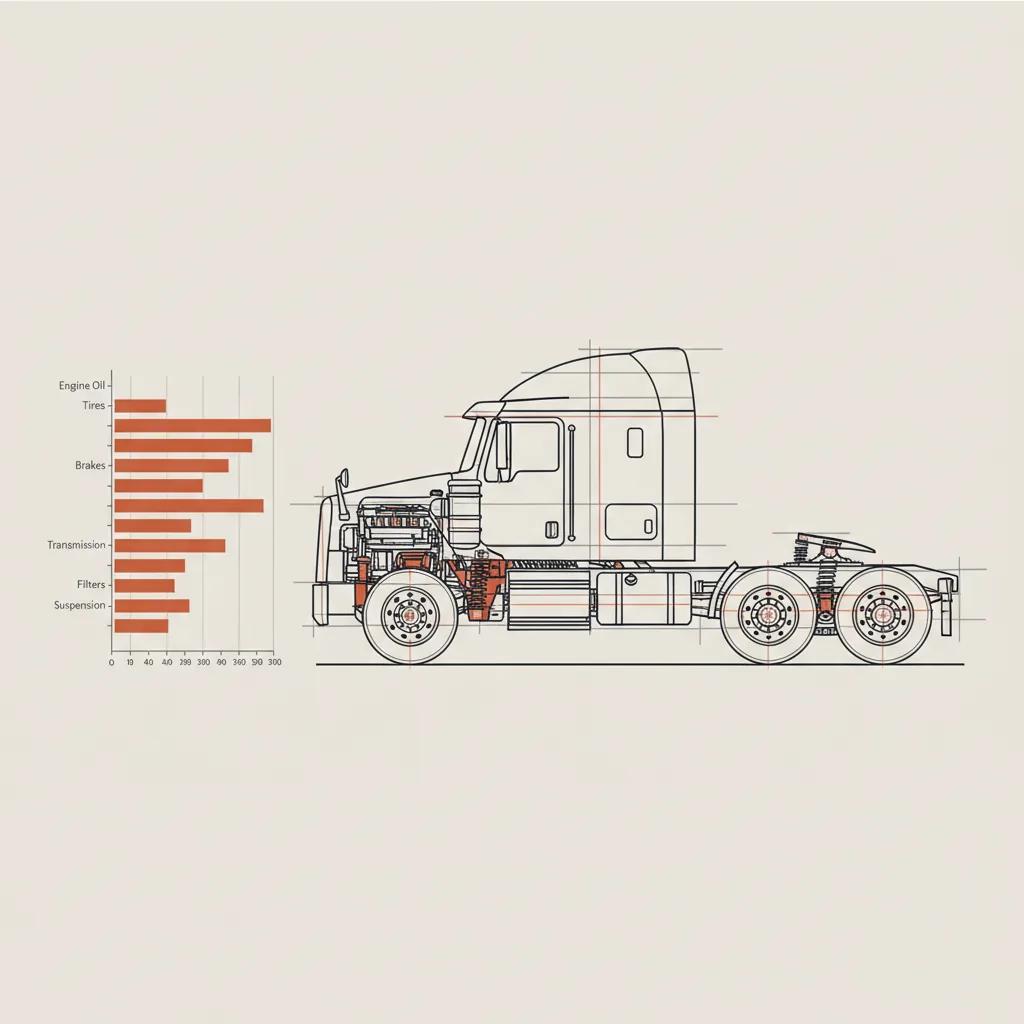
Fleet preventive maintenance is best organized by mileage, not guesswork. Most commercial fleets run a tiered schedule: daily and weekly driver checks plus three escalating service levels keyed to the odometer. PM-A is a light service usually performed every 10,000 to 25,000 miles (lube, oil, filter, and a safety inspection), PM-B adds drivetrain and brake work at roughly twice that interval, and PM-C is a comprehensive annual or high-mileage overhaul of major systems. Building your program around these intervals turns maintenance from a reactive scramble into a predictable, mileage-triggered routine.
This guide breaks down what belongs at each mileage tier so dispatchers, fleet managers, and owner-operators can assign the right work to the right odometer reading. Always confirm exact intervals against your specific engine and chassis OEM service manual, since duty cycle, engine make, and operating conditions all shift the numbers.
Why mileage-based intervals beat a single checklist
A flat "inspect everything" checklist treats a truck at 8,000 miles the same as one at 240,000 miles. That wastes labor on new equipment and under-serves high-mileage units. Mileage tiering solves this by matching the depth of service to wear that actually accumulates with distance.
The U.S. Department of Transportation, through the Federal Motor Carrier Safety Administration (FMCSA), requires every motor carrier to systematically inspect, repair, and maintain its commercial vehicles and to keep maintenance records under49 CFR Part 396. A mileage-keyed PM program is the cleanest way to prove that systematic process during a DOT audit because each service ties to a documented odometer trigger.
A few factors will compress your intervals:
- Severe duty cycle — stop-and-go city work, heavy loads, and steep grades (think the I-80 climb toward the Sierra) age components faster than steady highway miles.
- Engine and oil type — newer engines running full-synthetic oil often extend drain intervals; confirm against the engine maker's spec.
- Idle hours — heavy idling adds engine wear that the odometer never records, so high-idle units may need engine-hour triggers alongside mileage.
Daily: the driver's pre-trip and post-trip inspection
The foundation of any fleet PM program is the daily driver inspection, which happens regardless of mileage. FMCSA regulations require a driver to be satisfied the vehicle is in safe operating condition before driving and to complete a driver-vehicle inspection report (DVIR) when a defect is found. Daily checks catch the fast-developing problems mileage intervals can miss:
- Tire pressure, tread, and visible damage
- Air brake function and a check for air leaks
- Lights, reflectors, and turn signals
- Coolant, oil, and washer fluid levels
- Windshield, wipers, mirrors, and horn
- Leaks under the truck after parking
Any defect that affects safe operation should pull the truck from service until repaired. This is also where small fixes like a burned-out marker lamp or a glad-hand seal get caught before they become a roadside violation.
Weekly checks
Between formal PM services, a quick weekly walkaround catches slow leaks and creeping wear:
- Top off and inspect diesel exhaust fluid (DEF) level and cap seal
- Check belt and hose condition for cracks or glazing
- Verify battery terminals are clean and tight
- Look for fifth-wheel and kingpin lubrication and play
- Scan for new fluid spots and tire sidewall changes
PM-A: the light service (≈ every 10,000–25,000 miles)
PM-A is the most frequent scheduled service and the workhorse of the program. It centers on lubrication, oil, and a structured safety inspection. Many fleets align PM-A with their oil change interval, which is why the mileage range is so wide — confirm the drain interval with your engine OEM and oil supplier rather than defaulting to an old number.
A typical PM-A includes:
- Engine oil and filter change
- Chassis lubrication at all grease points
- Fluid level top-offs (coolant, power steering, transmission, differential, windshield washer)
- Tire pressure set to spec and tread depth measured
- Brake adjustment check and visual lining inspection
- Lights, wipers, and horn function test
- Air system check for leaks and governor cut-in/cut-out
- Visual inspection for leaks and loose components
This is also the natural point to scan for active and pending diagnostic trouble codes so an emissions or sensor issue gets flagged before it escalates into a derate.
PM-B: the intermediate service (≈ every 25,000–50,000 miles)
PM-B includes everything in PM-A and layers on deeper drivetrain, brake, and chassis attention. At this interval, components that wear gradually over tens of thousands of miles get measured and serviced:
- Full brake inspection: lining thickness, drums or rotors, slack adjuster travel, and chamber condition
- Fuel filter replacement (primary and secondary)
- Transmission and differential fluid inspection or change per OEM interval
- Steering and suspension component inspection for play and wear
- Driveline and U-joint inspection and lubrication
- Cooling system pressure test and coolant condition check
- Air dryer desiccant cartridge service per schedule
- Wheel-end inspection for hub seal leaks and bearing play
Because PM-B touches the brake system in depth, it pairs well with a formal DOT brake inspection so the truck stays inspection-ready and the work is documented together. Catching an out-of-adjustment slack adjuster or a thinning lining here is far cheaper than a roadside out-of-service order.
PM-C: the major service (≈ annual or every 100,000+ miles)
PM-C is the comprehensive overhaul-level service, usually performed annually or at high-mileage milestones. It folds in PM-A and PM-B items plus the major-system work that only comes due infrequently:
- Coolant flush and replacement per OEM service life
- DPF cleaning or replacement and a full emissions-system review
- Major engine service items (valve lash adjustment, injector inspection) per engine schedule
- Complete suspension and steering inspection with component replacement as needed
- Wheel bearing repack or replacement and hub seal renewal
- Electrical system load test: alternator output, starter draw, and battery capacity
- Drivetrain fluid changes and seal inspection
- Detailed frame, mounting, and exhaust inspection
PM-C is also a logical time to align with the annual DOT periodic inspection required under FMCSA rules, so the truck's compliance clock and its heaviest service reset together.
Tracking and triggering the work
A mileage schedule only works if something fires the alert. Whether you use fleet software, a spreadsheet, or telematics odometer feeds, set a trigger window before each PM mile mark so the truck can be scheduled without taking it off a load unexpectedly. Record the odometer, date, parts, and findings for every service — those records are exactly what FMCSA Part 396 expects you to retain.
When a unit is hundreds of miles from the shop, mobile service keeps the schedule intact. On-site fleet repair brings PM-A and PM-B service to your yard or a roadside location so a single overdue truck doesn't drag down your whole compliance program, and emergency roadside truck repair handles the breakdowns that slip through between intervals.
Cost factors to plan for
PM budgeting depends on more than the service tier. Costs scale with truck class and engine, the price of oil and filters at the volume your fleet buys, labor time for the inspection depth involved, and how many deferred items surface during a higher-tier service. Fleets that hold tight to PM-A intervals generally see fewer expensive PM-C surprises, because small problems get caught while they are still adjustments rather than replacements.
FAQ
What is the difference between PM-A, PM-B, and PM-C?
PM-A is a light, frequent service focused on lube, oil, filter, and a safety inspection. PM-B adds deeper brake, drivetrain, and chassis work at a longer interval. PM-C is the comprehensive, often annual service that covers major systems like cooling, emissions, and wheel ends. Each higher tier includes the work from the tiers below it.
How often should a commercial truck get preventive maintenance?
It varies by duty cycle and OEM specification. A common structure is daily driver inspections, weekly walkarounds, a PM-A light service every 10,000 to 25,000 miles, PM-B every 25,000 to 50,000 miles, and PM-C annually or at high-mileage milestones. Always confirm exact intervals with your engine and chassis manufacturer.
Does the FMCSA require a preventive maintenance schedule?
The Federal Motor Carrier Safety Administration requires carriers to systematically inspect, repair, and maintain their commercial vehicles and to keep maintenance records under 49 CFR Part 396. It does not dictate specific mileage numbers, so a mileage-keyed PM program is one of the cleanest ways to demonstrate that systematic process.
Should I use mileage or engine hours for PM intervals?
Use both when idling is heavy. Mileage drives most chassis and drivetrain wear, but engine hours capture wear from idling that the odometer never records. High-idle units, such as those running an APU or sleeping in cab, benefit from engine-hour triggers alongside mileage.
Can preventive maintenance be done on-site instead of in a shop?
Yes. Most PM-A and PM-B service items, including oil changes, lubrication, brake inspections, and filter changes, can be performed on-site at your yard or terminal with mobile service, which keeps trucks on schedule without long shop downtime.
Need to keep your fleet's PM schedule on track? 916 Truck Repair provides mobile, on-site preventive maintenance and repair across the Sacramento metro and Northern California. Call (916) 898-9090 for 24/7 mobile dispatch.
 By Vladimir Sardari · Owner & Lead Technician