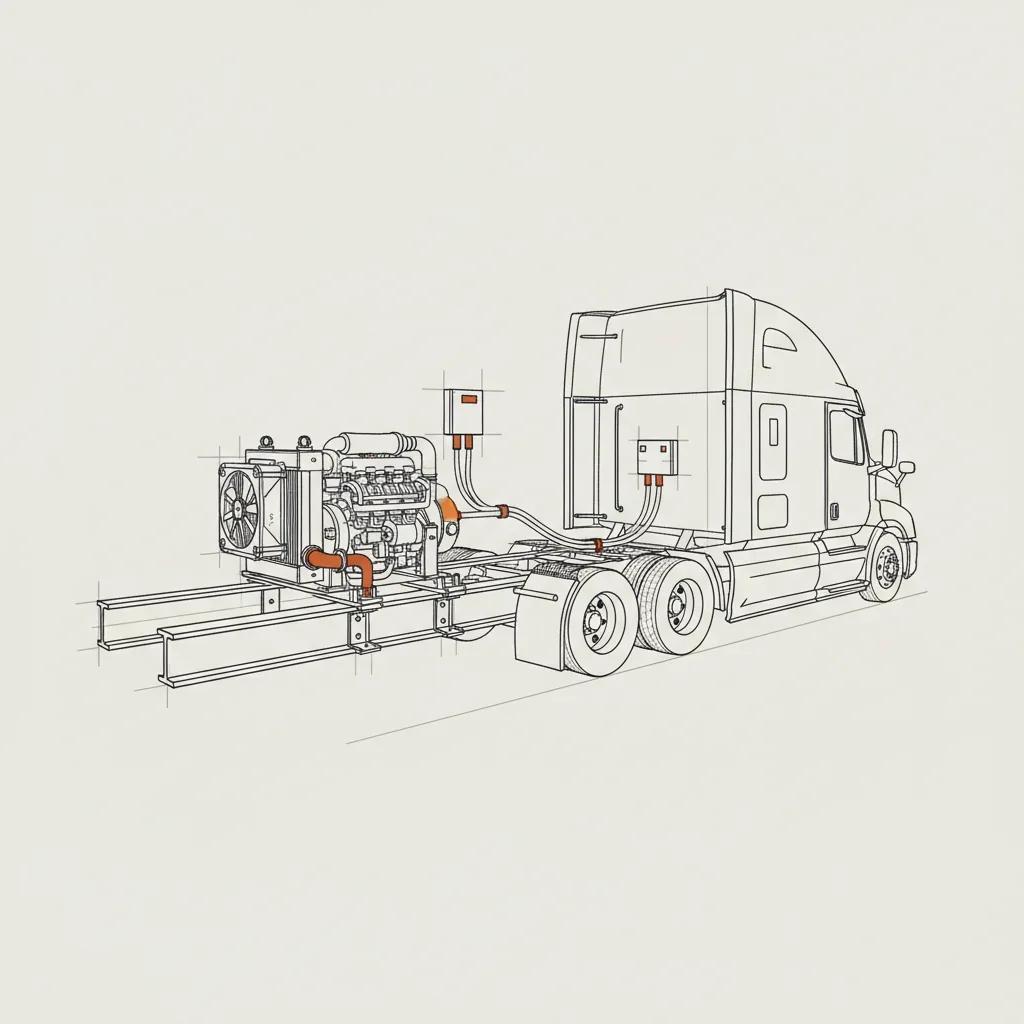
An auxiliary power unit (APU) keeps a truck's cab heated, cooled, and powered while the main diesel engine is off, which cuts idling, saves fuel, and helps drivers stay legal under anti-idling rules. The most effective APU maintenance is simple and routine: change the oil and filters on schedule, keep the cooling and battery systems healthy, and act on small symptoms before they strand you. When an APU won't start, won't hold a charge, or stops putting out heat or cold, the cause is usually traced to fuel, batteries, belts, or coolant, and many of those failures can be diagnosed and repaired on site rather than in a shop.
What an APU Does and Why Maintenance Matters
An APU is a small, self-contained system that provides climate control and electrical power to the sleeper and cab without running the truck's main engine. There are two broad types:
- Diesel-fired APUs run a tiny diesel engine that drives an alternator and a dedicated HVAC compressor, drawing fuel from the truck's main tank.
- Battery-electric APUs use a large dedicated battery bank to run climate control and accessories, recharged by the main engine's alternator or shore power.
Because an APU is built to run for long hours overnight and during rest breaks, it accumulates operating hours fast. A unit that runs eight to ten hours a night racks up engine hours quickly even when the truck is parked, so it needs its own maintenance schedule separate from the truck. Neglecting that schedule is the single biggest reason APUs fail early.
The payoff for staying on top of it is real. Idling burns fuel and adds wear to the main engine. The U.S.Department of Energynotes that long-duration truck idling consumes roughly 0.8 gallons of diesel per hour, which is exactly the cost an APU is meant to eliminate. A neglected APU that quits puts that idling cost right back on you, on top of the repair.
A Practical APU Maintenance Schedule
Manufacturers publish their own intervals, so always follow your specific unit's manual first. The items below are the common service points across most diesel-fired and electric APUs.
Every 1,000-1,500 Engine Hours (Diesel APUs)
- Change the engine oil and oil filter using the grade the manufacturer specifies.
- Replace the fuel filter to protect the small injection system from dirt and water.
- Inspect and replace the air filter when it's dirty.
- Check and adjust belt tension; replace cracked or glazed belts.
Seasonal and Routine Checks
- Inspect coolant level and condition before summer heat and winter cold.
- Clean the condenser and evaporator coils so the HVAC side can move heat efficiently.
- Test the batteries and clean the terminals; corroded connections are a frequent no-start cause.
- Check mounting bolts and brackets for vibration loosening.
- Look for fuel, oil, and coolant leaks around the unit and its lines.
For Battery-Electric APUs
- Monitor battery state of health and replace the bank as a matched set when capacity drops.
- Keep terminals and cables clean and torqued.
- Verify the charging circuit from the main alternator is delivering full voltage.
Keeping a simple log of engine hours and service dates makes it easy to catch the next interval before it slips. Fleet managers can fold APU hours into the same preventive-maintenance system they use for the truck; if you're building that out, our guide to fleet preventive maintenance intervals covers how to structure it.
Common APU Problems and How to Troubleshoot Them
Most APU complaints fall into a handful of categories. Here's how to narrow down the cause.
The APU Won't Start
On a diesel-fired unit, a no-start usually points to fuel or batteries:
- Low or dead starting batteries. Test voltage; weak or corroded connections are common.
- Fuel supply issues. A clogged fuel filter, air in the lines, or gelled fuel in cold weather can stop a small diesel from firing.
- Glow plug or starter faults. These keep the engine from lighting off, especially in cold conditions.
On an electric APU, no power to the cab usually means a depleted or failing battery bank, a charging fault from the main engine, or a tripped breaker or blown fuse.
No Heat or No Cold Air
When the engine runs but climate control fails:
- For cooling, suspect a refrigerant charge problem, a failed compressor or clutch, or coils clogged with dirt and bugs.
- For heat, check coolant level, the heater core circuit, and the blower motor.
- A blower that runs but moves little air often means a plugged cabin filter or fouled coils.
Poor Output, Hard Starting, or Excessive Smoke
These point to engine-side wear: a tired fuel filter, dirty air filter, worn injectors, or low compression. Black or excessive smoke on a diesel APU warrants a closer look before it gets worse.
Won't Charge or Drains the Truck Batteries
If the APU isn't maintaining the truck's batteries, check the APU's alternator output, the charging cables and connections, and the unit's charge controller. A failing alternator or a bad ground will both show up as a charging complaint.
Excessive Vibration or Noise
New rattles or vibration usually mean loose mounts, a worn belt, or a failing bearing. Catching these early prevents secondary damage to lines and brackets.
Many of these failures overlap with the truck's own systems. A charging complaint can come from the truck, not the APU; our overview of alternator repair and broader electrical and wiring repair helps when the line between the two isn't obvious.
When to Repair It Yourself vs. Call for Service
Drivers can handle the basics: filter changes, battery cleaning, coil cleaning, belt inspection, and topping off fluids. Those are exactly the items that prevent most breakdowns.
Call a technician when you hit:
- A no-start that isn't fuel or a loose battery cable.
- Refrigerant or compressor work, which requires proper equipment and handling.
- Internal engine problems, hard starting, smoke, or low compression.
- Charging or wiring faults you can't trace.
- Any failure that leaves you without heat or cooling on the road.
Because an APU that quits often does so right when you need rest, mobile service matters. A technician who comes to the truck stop or yard can diagnose and fix many APU faults on site, and that same dispatch can address related electrical or cooling issues at once. For on-site diagnosis and service in the region, see our APU repair page or call dispatch directly.
FAQ
How often should I change the oil in a diesel APU?
Follow your unit's manual, but most diesel-fired APUs call for an oil and filter change every 1,000 to 1,500 engine hours. Because APUs run on engine hours rather than miles, track hours separately from the truck's odometer.
Why won't my APU start?
The most common causes are weak or corroded starting batteries and fuel problems such as a clogged fuel filter, air in the lines, or gelled fuel in cold weather. Glow plug and starter faults are also frequent, especially in cold conditions.
Does running an APU really save fuel compared to idling?
Yes. Idling the main engine for climate control burns significant fuel; the U.S. Department of Energy estimates long-duration truck idling uses about 0.8 gallons of diesel per hour. An APU provides the same comfort using far less fuel, which is why fleets use them to meet anti-idling rules.
Why is my APU running but not blowing cold air?
If the engine runs but cooling fails, suspect a refrigerant charge issue, a failed compressor or clutch, or condenser and evaporator coils clogged with dirt. Cleaning the coils and the cabin filter solves many weak-airflow complaints; refrigerant and compressor work needs a technician.
Can an APU be repaired on site, or does it need a shop?
Many APU faults, including battery, fuel filter, belt, coil, and charging problems, can be diagnosed and repaired on site by a mobile technician. More involved internal engine or refrigerant repairs may take longer but can often still be handled where the truck is parked.
Keep Your APU Working When You Need It Most
An APU only pays off when it runs reliably, and reliability comes from routine service and acting on small symptoms early. If your unit won't start, won't heat or cool, or won't hold a charge, 916 Truck Repair offers 24/7 mobile APU diagnosis and repair across the Sacramento metro and Northern California, including the I-5, I-80, CA-99, and US-50 corridors. Call (916) 898-9090 anytime to get a technician dispatched to your location.
 By Vladimir Sardari · Owner & Lead Technician