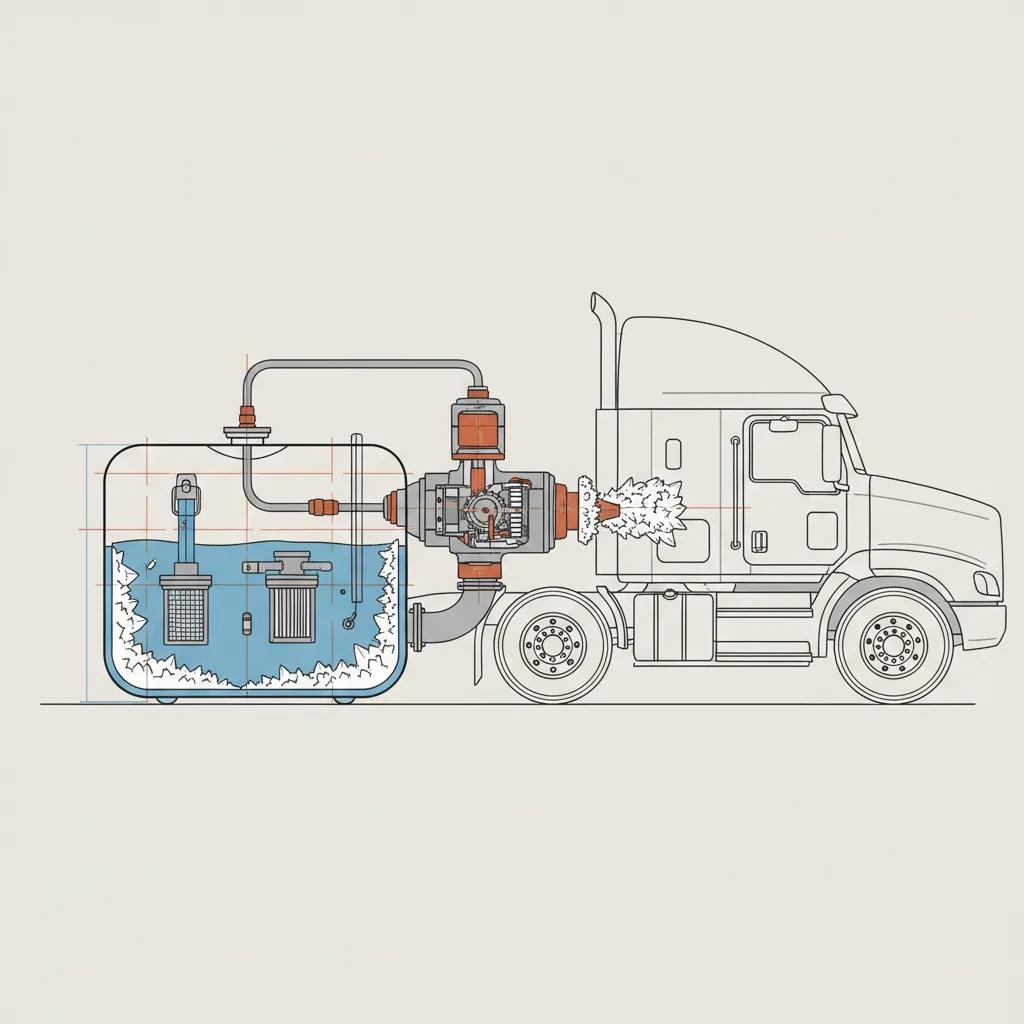
A full DEF tank will not clear a derate, because tank level is only one of the conditions that trigger one. EPA's SCR inducement framework also derates for out-of-spec DEF concentration, a missing-catalyst signal, and open-circuit faults in the DEF pump, dosing valve, tank heater, or NOx sensors. SPN 5246 FMI 0, the severe operator inducement, is the consequence, not the cause. DEF system repair starts by reading the codes and confirming fluid quality, because the derate holds until the fault underneath it is corrected.
If you run a diesel truck built in the SCR era, the DEF (diesel exhaust fluid) system is one of the most common reasons for an unexpected breakdown or speed limit. Understanding the warning sequence helps you act before a manageable issue turns into a truck stuck at 5 mph on the shoulder.
How the DEF System Works (and Why It Fails)
DEF is a urea-and-water solution injected into the exhaust stream as part of selective catalytic reduction (SCR). The U.S. Environmental Protection Agency (EPA) requires SCR-equipped diesel engines to reduce nitrogen oxides (NOx), and the truck's emissions controls actively monitor whether the system is working. When something is off, the engine control module logs a fault and begins a staged warning and derate process to keep the truck emissions-compliant.
That design is important context for DEF system repair: the truck is not malfunctioning when it derates. It is doing exactly what it was built to do. Your job, and ours, is to find why the system thinks it has a problem.
Common failure points include:
- DEF fluid quality — DEF degrades with heat, age, and contamination. Topping off with water, diesel, or the wrong fluid will trigger quality faults.
- DEF pump and injector (dosing unit) — these wear, clog, or fail electrically over time.
- Sensors — NOx sensors, DEF quality sensors, and level/temperature sensors are frequent fault sources.
- Crystallization — DEF can crystallize into hard white deposits around the injector and lines, restricting flow.
- Heaters and wiring — DEF freezes in cold weather, so the system has heaters; failed heaters or chafed wiring throw codes.
Symptoms of a Failing DEF System
DEF problems rarely appear all at once. There is usually a sequence, and catching it early is the difference between a roadside call and a planned shop visit.
Dashboard warnings and the derate ladder
- A DEF or SCR warning lamp, often amber at first
- A check engine light alongside emissions-related fault codes
- Messages about DEF quality, DEF level, or SCR system performance
- A staged power and speed reduction (derate) if the warning is ignored
The derate typically escalates. An early warning may do nothing to performance, but a persistent fault can drop the truck into a low-speed limp condition that makes it nearly undriveable. Once you are in a hard derate, you are usually looking at a tow or a mobile truck repair visit rather than limping to a shop.
Other warning signs
- DEF consumption that suddenly spikes or drops
- White crystalline buildup around DEF lines, the injector, or the tank cap
- Audible DEF pump cycling that sounds rough or runs constantly
- Hard starts or rough running tied to emissions faults
- A DEF gauge that reads incorrectly or bounces
If you see crystallized DEF deposits, treat them as a real warning. They indicate leakage or incomplete dosing and they can worsen quickly.
Common Causes Behind DEF Fault Codes
Contaminated or degraded DEF
DEF is sensitive. It should be stored out of direct sunlight and used within its shelf life. Heat accelerates breakdown, and even a small amount of diesel, washer fluid, or dirt introduced during a fill can push the concentration out of spec. The quality sensor will catch it, and the system will fault. Always use fresh DEF from a clean, sealed source and never reuse questionable fluid.
Pump and dosing injector failure
The dosing system has to deliver a precise spray under pressure. Pumps lose pressure, injectors clog with crystallized urea, and the supply or return lines crack. These are mechanical wear items, and high-mileage trucks see them more often.
Sensor and NOx faults
NOx sensors measure exhaust output before and after the catalyst. When one drifts or fails, the system can no longer confirm the SCR is doing its job and will fault even if dosing is fine. This is why guessing at parts is expensive: a NOx sensor fault and a dosing fault can produce similar symptoms but need entirely different repairs.
Crystallization and freezing
DEF freezes at roughly the temperature the manufacturers design the heaters around, so the system is built to thaw it. A failed heater, a stuck thermostat in the DEF circuit, or wiring damage can leave fluid frozen or allow crystals to build, both of which interrupt dosing.
How DEF System Repair Actually Works
Proper diesel engine repair on an emissions system is diagnostic-first. Throwing parts at a DEF fault is one of the fastest ways to spend money without fixing anything.
A sound process looks like this:
- Pull and document the fault codes with a scan tool that reads the engine and aftertreatment modules, not just generic OBD codes.
- Verify DEF quality by testing concentration before condemning sensors or pumps.
- Inspect the physical system — lines, injector, pump, tank, heaters, and wiring — for leaks, crystallization, and chafing.
- Test components in the right order so a downstream symptom does not get blamed on the wrong part.
- Clear codes and confirm the system completes a proper dosing cycle without re-faulting.
For a truck already in a derate on the highway, this work often happens on-site. A roadside truck repair tech can frequently diagnose the fault, replace a failed sensor or injector, top off with verified DEF, and reset the system so the truck can move under its own power again.
What drives the cost
DEF repair cost depends on what failed and how accessible it is. General cost factors include:
- Whether the issue is fluid and a reset versus a hardware failure
- The specific component — a sensor, the dosing injector, or the full pump module
- Engine make and model and parts availability
- Labor to access the tank, pump, or lines
- Whether crystallization has spread to adjacent components
Catching an amber warning early almost always costs less than recovering a truck from a full derate.
Preventing DEF System Problems
You cannot make an emissions system last forever, but good habits cut downtime:
- Buy DEF from high-turnover, reputable suppliers and check fill dates
- Keep the DEF cap and nozzle clean to avoid contamination
- Do not let the tank sit near empty for long periods
- Address amber warnings immediately rather than waiting for a derate
- Include the DEF and SCR system in regular preventive maintenance
For fleets, building DEF checks into scheduled service is one of the simplest ways to avoid surprise derates that pull trucks off dispatch.
FAQ
Can I keep driving with a DEF warning light?
An early amber warning may not limit performance, but it should be addressed right away. If you ignore it, the system will escalate to a derate that cuts speed and power, and you may end up stranded. Treat any DEF or SCR warning as a signal to get the truck diagnosed soon.
Why did my truck go into a derate?
A derate is the emissions system protecting compliance after a DEF or SCR fault is logged and not resolved. Common triggers are bad DEF fluid, a failed sensor, a clogged or failed dosing injector, or a heater fault. The derate clears only after the root cause is fixed and the codes are reset.
Is deleting or bypassing the DEF system an option?
No. Tampering with or removing emissions controls is illegal and not something a legitimate shop will do. The correct path is to repair the system so it functions as designed.
Can DEF problems be fixed on the side of the road?
Often, yes. Many DEF faults are sensor, injector, or fluid issues that a mobile technician can diagnose and repair on-site with the right scan tool and parts, restoring the truck to normal operation without a tow.
How do I keep DEF from causing breakdowns?
Use fresh, uncontaminated DEF from a trusted source, keep the fill area clean, do not run the tank near empty, and respond to warnings early. Folding DEF and SCR checks into preventive maintenance is the most reliable way to avoid unexpected derates.
Get DEF System Help Across Sacramento and Northern California
If your truck is throwing DEF codes or has dropped into a derate, call 916 Truck Repair at (916) 898-9090 for 24/7 mobile dispatch. We handle DEF system repair on-site across the Sacramento metro and Northern California, including the I-5, I-80, CA-99, and US-50 corridors and cities like Elk Grove, Stockton, Davis, Woodland, Roseville, and Auburn.
 By Vladimir Sardari · Owner & Lead Technician