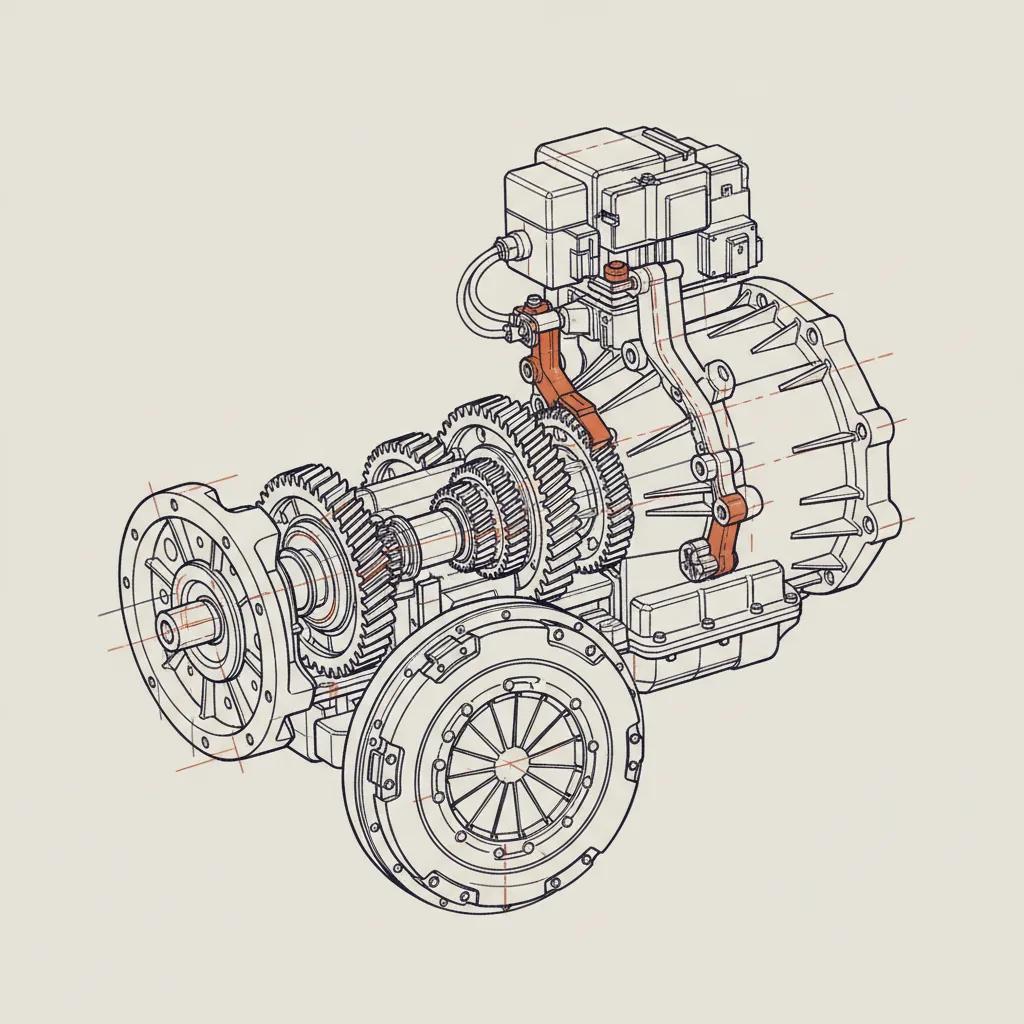
Most AMT transmission problems on heavy trucks come down to a handful of culprits: low or contaminated transmission fluid, worn clutch components, a failing shift actuator or air supply, or stored fault codes that force the transmission into a protected limp mode. An automated manual transmission (AMT) is a manual gearbox shifted by electronic and pneumatic actuators instead of a driver's clutch pedal, so when it shifts roughly, hesitates, or refuses to engage a gear, the fault is usually in those control components, the clutch, or the fluid, not in the gear set itself. The fix depends on which symptom you have, and on a heavy truck, the right first move is often a diagnostic scan rather than continuing to drive.
How an AMT Actually Shifts
Understanding the layout makes the symptoms easier to read. An AMT (sometimes called an automated manual or AMT gearbox, and marketed under names like Eaton Cummins Endurant and Detroit DT12) uses the same basic architecture as a manual transmission: a single dry clutch and a gear set. The difference is automation.
- A transmission control module (TCM) decides when to shift based on engine load, road speed, throttle, and grade.
- Electric or pneumatic actuators engage and release the clutch and select the gears.
- Sensors report shaft speeds, gear position, and clutch position back to the TCM.
Because so much of the shift is electronically managed, a problem with a sensor, an actuator, the air supply, or the clutch shows up as a shifting complaint, even when the gears and shafts are healthy. That is also why a scan tool is so valuable: the TCM usually logs a fault code that points straight at the failing component.
Common AMT Transmission Problems and What They Mean
Hard or Harsh Shifting
A shift that bangs, jerks, or clunks instead of feeling smooth points to the clutch or the shift control. Common causes:
- A worn or glazed clutch that can no longer engage smoothly.
- A miscalibrated clutch, AMT clutches often need a clutch-touch-point relearn after service or wear.
- Low or degraded transmission fluid, which affects synchronizer and shift performance.
- A weak or sticking shift actuator.
Harsh shifting that gets worse over time usually means clutch wear or a calibration that has drifted, both of which a technician can diagnose with a scan and a road test.
Hesitation or Slow Shifts
If the transmission takes a long beat to find the next gear, or hangs between gears, the issue is often air or actuator related on pneumatically shifted units:
- Low air pressure or an air leak starving the shift actuators.
- A failing speed sensor giving the TCM bad shaft data.
- Contaminated fluid slowing internal movement.
- A clutch that is slipping and confusing the shift logic.
On an AMT, hesitation is not something to drive through indefinitely. A unit that struggles to complete a shift can drop into a fault state at an inconvenient moment, on a grade or in traffic.
Stuck in Neutral or Won't Engage a Gear
When an AMT hangs in neutral and refuses to take a gear, treat it as a stop-driving situation. Typical causes include:
- A failed shift or clutch actuator.
- Insufficient air pressure to move the actuators.
- A clutch-position or gear-position sensor fault.
- A protective TCM strategy that has pulled the transmission out of gear after detecting a fault.
Forcing or repeatedly cycling the transmission can make things worse. This is a common reason fleets call for on-site help rather than risk a tow.
Warning Light, Fault Code, or Limp Mode
Many AMT complaints start with a transmission warning lamp or a sudden gear-range restriction. The TCM monitors itself and will limit shifting or force a low gear to protect the driveline when it sees a problem, the same protective logic used in diesel engine repair for emissions and powertrain faults. The fault code is the fastest path to a correct repair, so the first step is almost always to pull codes with a heavy-duty scan tool rather than guess.
What Causes AMT Shifting Problems
Across those symptoms, the underlying causes cluster into a few categories:
- Fluid issues. Low level from a leak, or fluid that is overdue for service, degrades shift quality. Use only the fluid the transmission maker specifies, the wrong fluid causes its own shifting faults.
- Clutch wear. The single dry clutch in an AMT wears like any clutch. As it wears, the touch point moves and shifts get rough until the clutch is relearned or replaced.
- Actuator and air-system faults. Worn actuators, solenoids, or low air pressure on pneumatic units interrupt clean shifts. Air leaks elsewhere on the truck can pull pressure below what the transmission needs.
- Sensor faults. Speed, clutch-position, and gear-position sensors feed the TCM. Bad data produces bad shifts.
- Software and calibration. AMTs sometimes need TCM software updates or recalibration after repairs. A missed relearn can mimic a mechanical fault.
When to Stop Driving and Call for Repair
A rough shift you've noticed for weeks is different from a transmission that just dropped into neutral on the highway. Pull over and call for help if you have any of these:
- The truck will not engage a gear or hangs in neutral.
- A transmission warning light comes on with a gear-range limit or limp mode.
- Shifting is suddenly far worse than normal, with slipping, grinding, or banging.
- You smell a burning-clutch odor or notice a fluid leak under the transmission.
Continuing to drive an AMT that is signaling a fault can turn a sensor or actuator repair into a clutch or internal repair. Because these units need diagnostic equipment and often a calibration step, an AMT problem is rarely a roadside DIY fix. A mobile technician can scan the TCM, check fluid and air pressure, and in many cases get you moving without a tow.
916 Truck Repair handles AMT and other gearbox issues through dedicated heavy-duty transmission repair, and when a truck is down on the shoulder, roadside truck repair brings the diagnostic tools and parts to you across the Sacramento metro and the I-5, I-80, CA-99, and US-50 corridors.
How AMT Problems Are Diagnosed and Repaired
A proper AMT diagnosis follows the same logic a technician uses on any electronically controlled system:
- Pull TCM fault codes with a heavy-duty scan tool to narrow the search.
- Check transmission fluid level and condition, and inspect for leaks.
- Verify air pressure and look for leaks on pneumatically shifted units.
- Test the relevant sensors and actuators against the codes.
- Road-test, then perform any required clutch relearn or TCM calibration.
Depending on findings, the repair might be as simple as topping and servicing fluid and relearning the clutch, or as involved as replacing an actuator, sensor, or the clutch itself. The diagnostic step is what keeps the repair from becoming guesswork.
FAQ
What is an AMT transmission?
An AMT, or automated manual transmission, is a manual gearbox with a single dry clutch that is shifted automatically by a control module and electric or pneumatic actuators instead of by a driver working a clutch pedal. Eaton Cummins Endurant and Detroit DT12 are common heavy-truck examples.
Why is my AMT shifting hard?
Hard shifting on an AMT usually traces to a worn clutch, a clutch touch point that needs relearning, low or degraded transmission fluid, or a weak shift actuator. A scan tool and a road test identify which one.
Can I keep driving an AMT that's stuck in neutral?
No. If an AMT hangs in neutral or refuses a gear, stop driving and call for repair. Repeatedly cycling the transmission can worsen an actuator or clutch problem. This is a common situation for on-site diagnosis rather than a tow.
Does an AMT transmission need fluid changes?
Yes. AMTs use the gearbox fluid specified by the manufacturer, and that fluid must be serviced on schedule and kept at the correct level. Low or wrong fluid causes shifting faults, so always use the maker's specified fluid.
Why is my truck's transmission warning light on?
The transmission control module turns on a warning lamp and often limits shifting when it detects a fault in a sensor, actuator, the clutch, or the air supply. The stored fault code is the fastest way to find the cause, so the first step is a diagnostic scan.
If your truck is shifting roughly, hanging in neutral, or showing a transmission fault, call 916 Truck Repair at (916) 898-9090 for 24/7 mobile dispatch across Sacramento and Northern California.
 By Vladimir Sardari · Owner & Lead Technician